
REVIEW · COMMUNIST HISTORY TOURS
Life Under Communism” with optional visit to the House of Terror
Budapest keeps its hardest stories close. This private three-hour tour connects Soviet memorials, 1956 battle sites, Parliament, and everyday communist culture, giving you a useful way to read parts of the city that can otherwise seem ordinary. I especially like the firsthand local perspective and the chance to stop at Bambi Presszó, one of the last cafés linked with the old communist era. The main thing to watch is the choice of tour option, since Memento Park and the House of Terror are separate additions, not automatic stops.
This is a good fit if you want political history explained through streets, squares, statues, and personal memories rather than through museum labels alone. Guides such as Miklós, Balázs, Agy, and Fungarian have received strong praise for making the subject clear and personal, though you should confirm your guide’s speaking style and exact plan before setting out.
In This Review
- Key Things to Know Before You Book
- Why Communist Budapest Makes a Good Walking Tour
- Liberty Square and the Soviet Memorial
- Kossuth Square and the 1956 Shooting
- Petőfi Statue and the Danube Crossing
- Corvin köz and the Street Fight of 1956
- Bambi Presszó and Everyday Communist Culture
- Memento Park, Where the Statues Were Sent
- The House of Terror on Andrássy Avenue
- Guide Quality and the Private Format
- Price, Timing, and What You Actually Receive
- Who Should Choose This Experience?
- Should You Book the Communist Budapest Tour?
- FAQ
- How long does the tour last?
- Is the tour private?
- Is hotel pickup included?
- Are Memento Park and the House of Terror included automatically?
- Is admission to the optional sites included?
- Can I cancel for a full refund?
Key Things to Know Before You Book
- The route begins at Liberty Square, where the Soviet war memorial opens a discussion about Budapest’s wartime destruction and postwar political order.
- Kossuth Square links the tour to the 1956 uprising, including the still-disputed death toll from the shooting outside Parliament.
- Corvin köz reveals the physical side of resistance, where young Hungarians fought Soviet tanks with improvised weapons.
- Bambi Presszó adds an everyday detail, showing how a coffeehouse can preserve the feel of a vanished political era.
- Memento Park and the House of Terror are different options, so check your confirmation carefully before assuming either is included.
- The price is $280.33 per private group of up to five, making the value strongest for a small party that wants a tailored guide rather than a standard group walk.
Why Communist Budapest Makes a Good Walking Tour
The communist period can be hard to understand if you only visit grand monuments. The key events took place in public squares, apartment districts, cafés, government buildings, and on bridges. This tour uses those places to connect political decisions with daily life.
You will hear about the years after World War II, when Soviet influence shaped Hungary’s government, economy, public art, and private conversations. You will also examine the 1956 revolution, when civilians challenged that system and Soviet forces returned with tanks.
The appeal is not simply the number of facts. It is the way the route places those facts in front of you. A memorial in Liberty Square, bullet-scarred memories around Corvin köz, and a café associated with the old culture each tell a different part of the story.
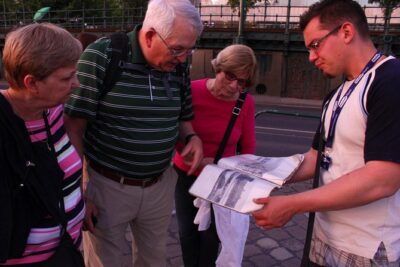
This is a private activity, so only your party takes part. That matters here. Political history often raises questions, and a private guide can slow down, explain a point again, or adjust the conversation to your interests. Several guides have been praised for answering questions, adding personal stories, and helping visitors use Budapest’s public transport after the tour.
The experience lasts about three hours, though one account describes a tour that ran beyond the advertised time to accommodate the group. You should not count on extra time, but the private format gives the guide some room to adjust the pace.
More communist-era history tours:
- Budapest: Communist History Tour with House of Terror Option
★ 4.8 · 182 reviews - Communism in Hungary with a Historian
★ 5.0 · 70 reviews - Budapest: 3-Hour Walking Tour About Communism (Small Group)
★ 4.7 · 70 reviews
Liberty Square and the Soviet Memorial
The tour begins at Liberty Square, or Szabadság tér, a broad green space in central Budapest. At first glance, it is a pleasant place to rest. Its political layers are less obvious.
The square contains Budapest’s large Soviet memorial, built to remember the Soviet army’s role in the siege of Budapest near the end of World War II. The siege lasted about 50 days and left the capital badly damaged. The memorial is grand and imposing, and it remains politically charged because it represents both liberation from Nazi rule and the beginning of Soviet domination.
That mixed meaning is central to understanding modern Hungary. A monument can commemorate one event while reminding people of another painful period that followed. Your guide’s explanation is especially useful here because the memorial is easy to pass without knowing why it still matters.
Liberty Square also carries an older layer from the Habsburg era. The space once held the Újépület, a fortress-like complex compared with the Bastille. The present-day open square is a sharp contrast to that earlier building and makes a calm first setting for a difficult subject.
Kossuth Square and the 1956 Shooting
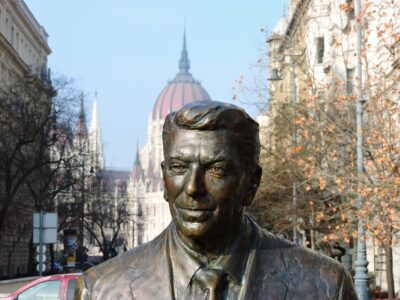
From Liberty Square, the route continues to Kossuth Square, home of the Hungarian Parliament. The building is one of Budapest’s grandest sights, but this stop is less about architecture than about the crowd gathered here during the 1956 revolution.
On October 25, 1956, demonstrators assembled in front of Parliament. A firefight followed, and the exact number of people killed remains uncertain. The crowd included civilians from many parts of society, including women, children, and older people. News of the deaths helped push Hungary toward wider revolt and armed resistance.
The square’s name honors Lajos Kossuth, a major figure in Hungarian political history. Across from Parliament, you can also see the Museum of Ethnography and the Ministry of Agriculture. The tour allows about 20 minutes at this stop, enough for an explanation and a look around, but not a full visit inside Parliament.
That limitation is important. This is an exterior history walk, not a Parliament tour. If you want to enter the building, you will need a separate ticket and arrangement.
Petőfi Statue and the Danube Crossing
The route then moves toward the Petőfi Statue and Március 15. Square, near the foot of Erzsébet Bridge. The area sits beside the oldest church in Budapest and was renovated in 2011, making it a popular social space.
This stop helps connect political history with public life. Statues and squares are not only formal memorial sites in Hungary. They can also become meeting places, protest locations, and everyday gathering points. Petőfi himself is strongly linked with Hungarian national feeling, making the statue a useful place to discuss the country’s long tradition of political resistance.
You then cross one of Budapest’s bridges toward Buda and the foot of Gellért Hill. The walk offers some of the city’s best views, but remember that the tour is not only a sightseeing stroll. The bridge serves as a transition from central Pest to the next chapter of the story.
At St. Gellért Square, the guide points out the view toward the Liberty Statue on Gellért Hill. The statue was erected in 1947 to commemorate the Soviet liberation of Hungary. As with the Liberty Square memorial, its meaning changed after communism ended. What began as a Soviet-era monument is now part of a more complicated public memory.
More things to do in Budapest:
- Budapest: City Highlights Cruise with Welcome Drink
★ 4.6 · 35,610 reviews - Budapest: Unlimited Prosecco, Beer and Aperol Spritz Cruise
★ 4.8 · 25,310 reviews - Budapest: Széchenyi Spa Day Ticket with Optional Upgrades
★ 4.3 · 23,911 reviews - Budapest: Nighttime or Daytime Sightseeing Cruise
★ 4.2 · 21,062 reviews
Corvin köz and the Street Fight of 1956
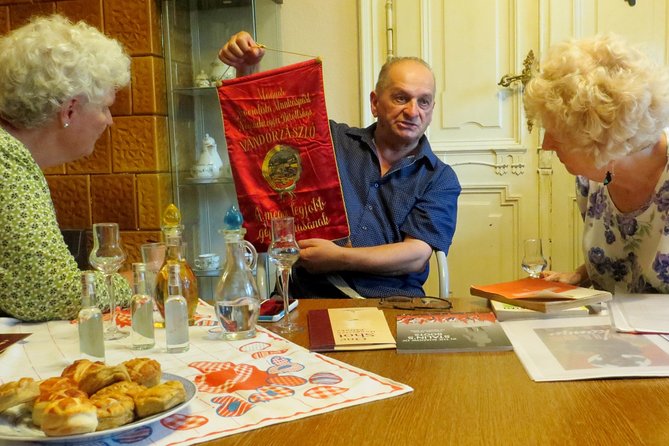
Corvin köz is one of the most powerful stops because it brings the revolution down to street level. In 1956, local young people used guns taken from soldiers and Molotov cocktails against Soviet tanks. This district became one of the main centers of resistance.
You can expect the guide to point out reminders of the fighting and explain the Soviet invasion and its aftermath. The subject is intense, but the setting is an ordinary urban neighborhood. That contrast makes the story easier to grasp. A revolution is not an abstract event here. It happened at intersections and in streets where people lived.
This may be the strongest stop for anyone interested in military history or the human side of political change. It also shows why the tour works best with an active guide. Without context, Corvin köz can look like another city street. With a clear explanation, it becomes a place where inexperienced young fighters confronted a major army.
Bambi Presszó and Everyday Communist Culture
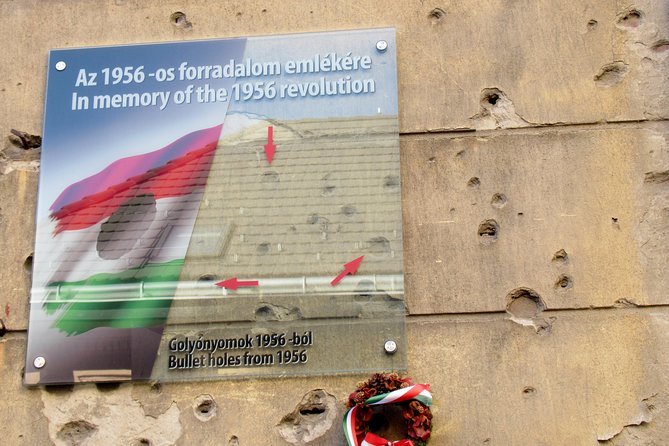
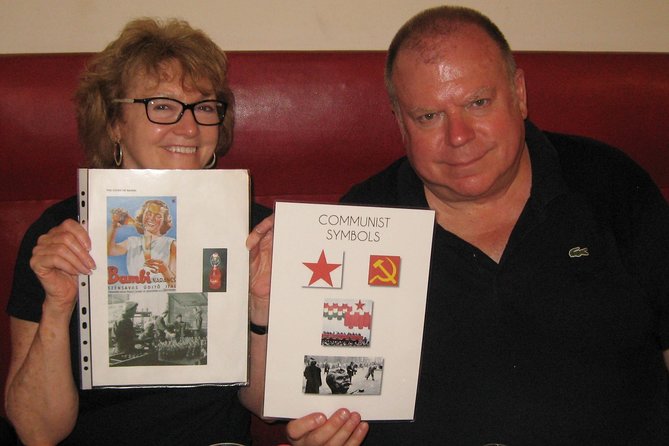
A coffee stop at Bambi Presszó gives the tour a welcome change of pace. The café is described as the last stronghold of communist culture, a place where you can consider how the era lived on through design, habits, and social customs rather than only through monuments.
This is one of the most distinctive parts of the experience. You are not just looking at a statue from a distance. You are sitting down in a place connected with the period and hearing how ordinary life worked behind the Iron Curtain.
The exact cost of the coffee deserves attention. The experience includes the café stop, but additional food and drink are listed as not included. I would bring some Hungarian forints or a payment card and ask the guide at the start whether your drink is covered. One unhappy account specifically involved paying for coffee and later questioning the charge, so a quick clarification can prevent a needless misunderstanding.
Memento Park, Where the Statues Were Sent
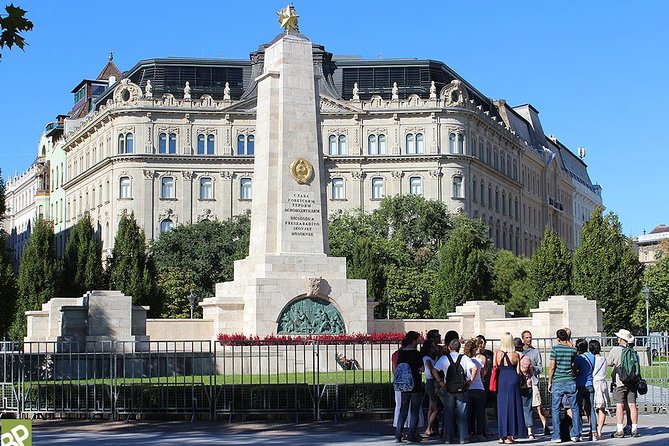
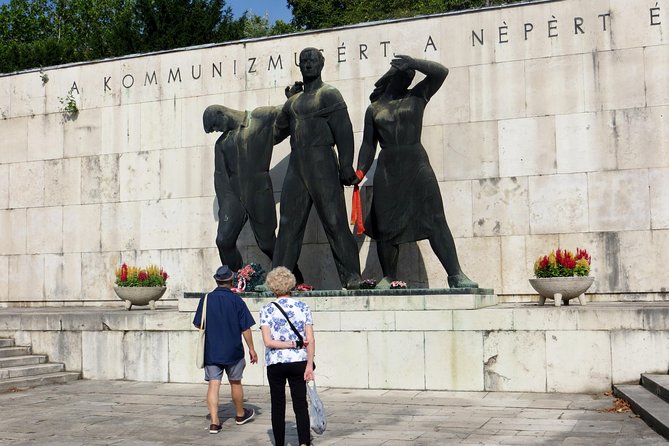
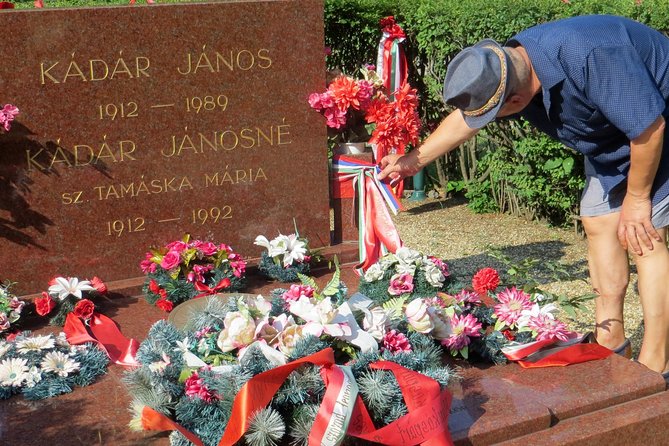
If you choose the Memento Park option, you add about one hour to the experience. The park was created after communism collapsed in 1989, when Budapest had to decide what to do with public statues that had celebrated the old system.
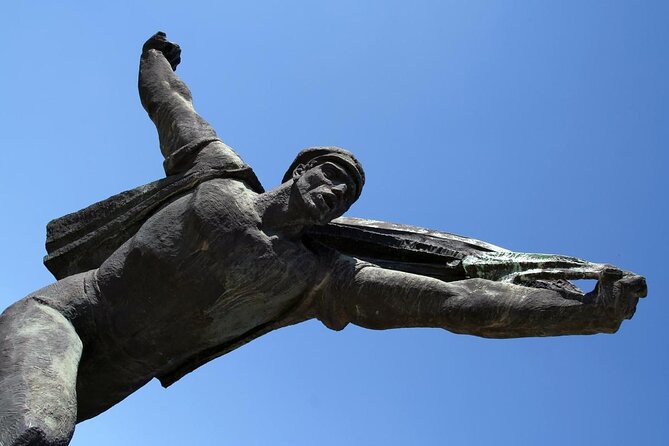
Rather than destroy all of them, the city saved many and placed them together in 1993. The result is an outdoor collection that lets you examine communist public art outside its original political setting.
Memento Park is a strong choice if you want to see the visual language of the period. The statues can feel imposing in their original form, but their relocation changes how you read them. You can look at them as evidence of state power, public messaging, and the way political symbols lose authority when the government behind them disappears.
The practical catch is transportation. One account notes that the group paid separately for public transport, and another describes the guide helping visitors learn how to use Budapest’s system. The tour price is therefore not the entire cost of a Memento Park visit if transit or other extras apply.
The House of Terror on Andrássy Avenue
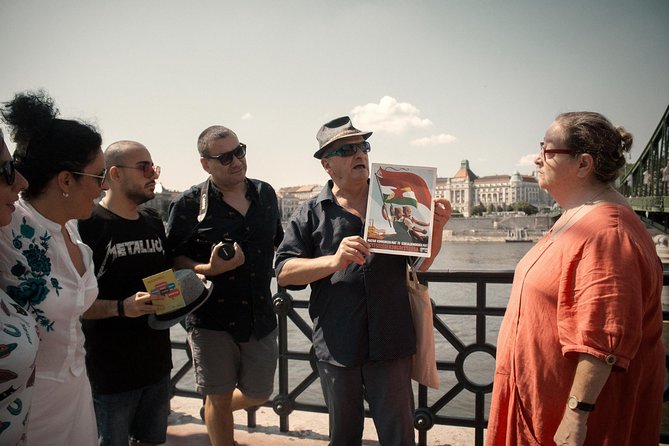
The House of Terror option adds about one hour at the museum. It covers the building connected with Hungary’s fascist and communist dictatorships and uses a heavily redesigned exterior to make the site feel like a memorial.
The black exterior frame includes decorative architectural elements, blade-like walls, and a granite walkway. Inside, a Soviet T-54 tank is displayed. These details give the museum a forceful visual entrance before you even begin reading the exhibits.
The museum is a different experience from Memento Park. Memento Park is open-air and focused on relocated public statues. The House of Terror is an indoor museum in a building tied to political repression. If you prefer documents, rooms, objects, and a concentrated museum setting, this may suit you better.
You must select this option when booking. One serious complaint came from a guest who expected the House of Terror but had actually selected the city tour option. The provider’s response said the booking did not include the museum. The lesson is simple: check the exact wording on your confirmation, and contact Fungarian if it is unclear.
Also allow for the guide’s role inside the museum. One account found the museum commentary too limited, while other praise focused on guides who were strong at explaining history during the walking portions. If the museum is your main reason for booking, tell the guide that in advance and confirm how much interpretation is planned.
Guide Quality and the Private Format
The strongest praise for this experience centers on the guides. Miklós is described as polite, attentive, and able to provide a condensed but detailed account of Hungarian history. Balázs has been praised for adjusting the schedule, asking about the group’s interests, and adding personal stories. Agy is described as especially strong on Soviet history and willing to answer questions.
These details matter because the tour depends heavily on the person leading it. The route itself is easy to follow, but the meaning of a Soviet memorial or a 1956 resistance site depends on explanation.
There are also clear cautions. Two accounts describe a guide who spoke too softly, showed little enthusiasm, or smoked during the walk. The provider said smoking had been discussed with one party and that the guide had received permission, but you should still state your preferences clearly before starting.
A private tour gives you a chance to request a louder speaking pace, more museum time, or a focus on daily life. Do this early. One group asked to prioritize the House of Terror, and the change affected how the rest of the experience felt.
Price, Timing, and What You Actually Receive
The listed price is $280.33 per group of up to five people. For one or two people, that is a serious expense. For five people, it works out to about $56 per person before any additional transportation, drinks, or costs tied to an option not covered by the base booking.
I see the value in the private format if your group has a strong interest in Hungarian political history. You are paying for a local guide, a tailored conversation, handouts, and the ability to ask questions without keeping up with a large group.
The value is less convincing if you want a low-cost introductory walk or expect every expense to be included. The published details exclude additional food and drink, hotel pickup and drop-off, and entrance tickets not specifically listed. Memento Park and the House of Terror show admission included when you select those options, but transport can still cost extra.
The tour is offered in English and includes a mobile ticket. Pickup is offered, but the additional information also says hotel pickup and drop-off are not included, so confirm what pickup means for your booking. The safest approach is to clarify the meeting point, selected option, coffee, transport, and museum plan before the day begins.
A moderate level of physical fitness is recommended. You will walk through several central areas, cross a bridge, and use public transportation if you choose Memento Park. Children must be accompanied by an adult, and service animals are allowed.
Who Should Choose This Experience?
I would recommend it most strongly to:
- People who want Hungarian history explained through real streets and public places
- Small groups who prefer a private conversation
- Visitors interested in the 1956 revolution and Soviet influence
- Travelers who value local memories and personal context
- Families with older children who can follow serious political subjects
- First-time visitors who also want help using Budapest’s transport system
I would be more cautious if your priority is a polished museum tour with a fixed script. The experience can vary with the guide, and the House of Terror portion may not satisfy you if you want extended interpretation inside the museum.
Book at least a day ahead if possible. This experience is often reserved about 28 days before the date, suggesting that last-minute availability may be limited. Free cancellation is available until 24 hours before the start time, but changes made inside that window are not accepted.
Should You Book the Communist Budapest Tour?
Book it if you want to understand why Budapest’s squares, statues, and neighborhoods still carry political meaning. The best parts are the 1956 sites, the Soviet memorials, Bambi Presszó, and the chance to ask a local guide direct questions.
For the strongest value, bring a group of three to five people, decide between Memento Park and the House of Terror before booking, and confirm every extra cost. I would also send a short message asking who will guide the tour and whether the guide can speak clearly and spend time on your chosen museum.
Skip it if you want a cheap walk, dislike serious political history, or expect the base price to cover all coffee and transport. But if the subject interests you, this offers a thoughtful way to see Budapest beyond its postcard views, with the important reminder that the city’s communist past is not confined to a museum.
FAQ
How long does the tour last?
The main experience lasts approximately three hours. The Memento Park option and the House of Terror option each add about one hour.
Is the tour private?
Yes. Only your group participates, with a maximum group size of five people.
Is hotel pickup included?
Pickup is offered, but hotel pickup and drop-off are listed as not included. Confirm the exact pickup arrangement when you book.
Are Memento Park and the House of Terror included automatically?
No. They are separate visit options. You need to choose the relevant option when booking.
Is admission to the optional sites included?
Admission is listed as included for the selected Memento Park or House of Terror option. Tickets not specifically listed are not included.
Can I cancel for a full refund?
Yes. You can cancel at least 24 hours before the experience start time for a full refund. Cancellations or changes made less than 24 hours before the start time are not accepted.
Just added in Budapest
- Budapest: Private Walking Tour with a Local Guide★ 3.6 · 6 reviews
- Budapest: Danube River Views Bike Ride★ 4.8 · 23 reviews
- Budapest: City Bike Tour with Coffee Stop★ 5.0 · 37 reviews
- From Budapest: Guided Tour of Eger with Wine Tasting★ 4.5 · 6 reviews
- Walk to recent and aged spiritual sanctuaries near Budapest★ 5.0 · 5 reviews
- Walking consultancy with alternative psychologist and author★ 5.0 · 2 reviews
- Budapest: Guided Tour of the Parliament Building in Spanish★ 4.6 · 1,240 reviews
- Budapest: 3-Hour Trabant Sightseeing Tour★ 4.7 · 28 reviews
Communist History Tours, compared.
Communist History Tour with House of Terror Option
Read our review →3-Hour Walking Tour About Communism (Small Group)
Read our review →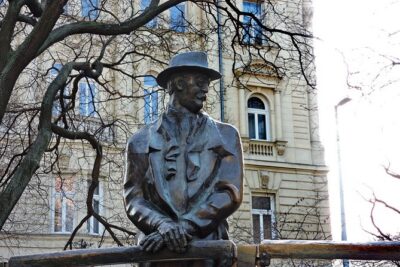

Lives of Hungarians Under Communist and Capitalist system
Read our review →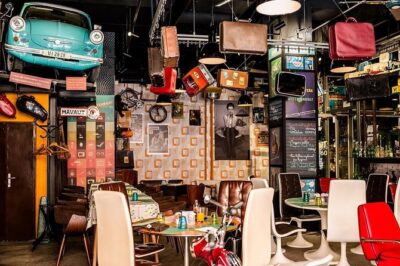
Private Budapest Hammer & Sickle Communist Times Tour
Read our review →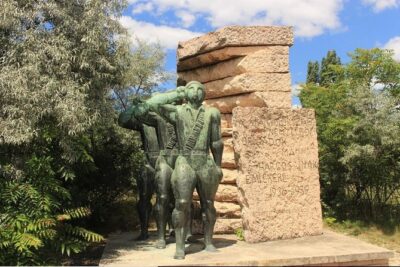
Memento Park Visit with Private Trabant Transfer
Read our review →
Browse the lists this tour appears in