
REVIEW · COMMUNIST HISTORY TOURS
Minivan to Communist Statues and Memento Park with Live Guide
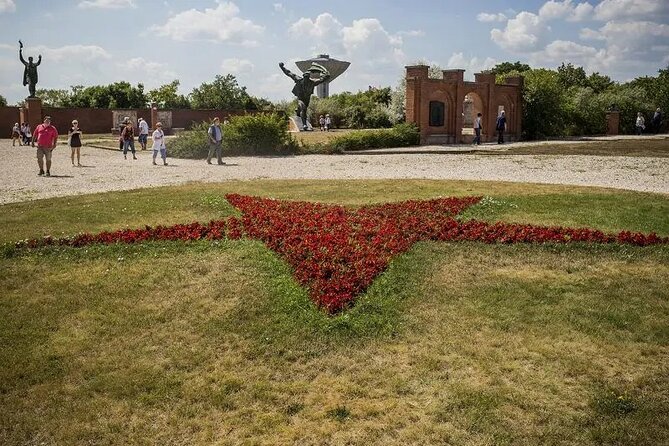
The statues tell a story. This small-group minivan tour takes you from central Budapest to Memento Park, where giant communist monuments explain how propaganda, fear, and forced loyalty shaped Hungary for four decades. I like the live English-speaking guide and the easy air-conditioned ride from Batthyány tér, especially since the park sits about 10 miles from the city center.
I also like that the visit goes beyond taking photos beside odd-looking statues. The guide explains Stalin’s Boots, the former Stalin Grandstand, secret-police recruitment, and the way public art was used to manipulate ordinary people. The main consideration is value: at $66.51 per person, the cost may feel high for a park that takes about 90 minutes to explore.
In This Review
- What makes this Memento Park tour worth considering
- Why Memento Park matters outside central Budapest
- The minivan ride from Batthyány tér
- Entering the park and seeing the monuments
- Stalin’s Boots and the memory of 1956
- Secret police, fear, and everyday control
- Taking photos beside failed political symbols
- Is $66.51 a fair price?
- Timing, weather, and comfort
- Who should book this Budapest outing?
- Should you book the Memento Park minivan tour?
- FAQ
- Where does the tour begin?
- Where does the tour end?
- How long does the tour last?
- Is admission to Memento Park included?
- Is the tour conducted in English?
- How many people can join the tour?
What makes this Memento Park tour worth considering
- Stalin’s Boots tell the story of a fallen dictator: The statue disappeared during the 1956 uprising, leaving only the boots behind.
- Victor adds personal context: He grew up in communist Hungary and connects the monuments with real stories from that period.
- Small groups keep the visit focused: The minivan holds no more than seven people.
- Transport solves an awkward Budapest outing: You get a ride from Batthyány tér to the park and back.
- The tour examines propaganda, not just sculpture: You learn how giant public monuments were meant to shape public thinking.
- Weather can affect the experience: The park is outdoors, and poor weather can lead to cancellation or make the visit less comfortable.
Why Memento Park matters outside central Budapest
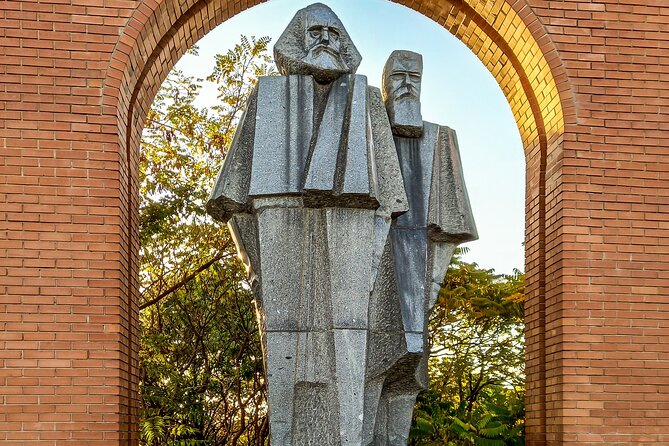
Memento Park is not a typical collection of beautiful statues. It is a place where Budapest has gathered the huge monuments once used to promote communist power. The figures were displayed in public areas from the end of the Second World War until the collapse of communism in 1990.
That change in setting matters. These statues were once part of daily life, placed where people could not easily ignore them. In the park, they are removed from their original political setting and arranged as reminders of a system that controlled public speech, law, work, and personal behavior.
You can visit on your own, but the park’s meaning is not always obvious from the stone and bronze alone. A guide helps you connect the visual oddities with the political system behind them. Instead of seeing only oversized workers, soldiers, and party figures, you begin to ask why they were made so large, why they were placed in public, and what ordinary Hungarians were expected to feel when they saw them.
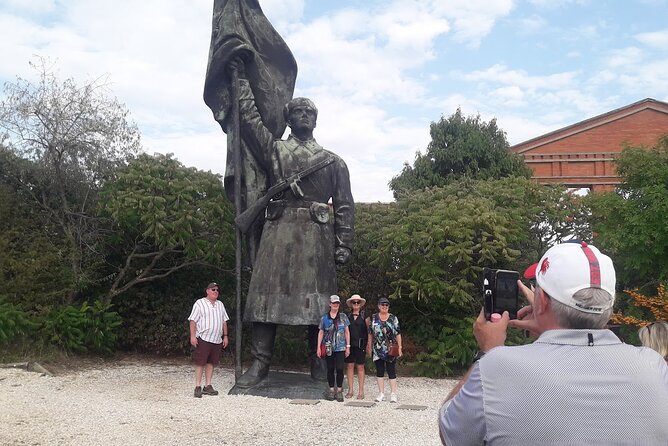
The park is also intentionally a little strange. You can pose beside the enormous monuments, which may seem playful at first. That contrast is part of the appeal. These were once serious tools of state messaging, but today you can photograph yourself beside them as failed symbols of a failed political order.
More communist-era history tours:
- Budapest: Communist History Tour with House of Terror Option
★ 4.8 · 182 reviews - Communism in Hungary with a Historian
★ 5.0 · 70 reviews - Budapest: 3-Hour Walking Tour About Communism (Small Group)
★ 4.7 · 70 reviews
The minivan ride from Batthyány tér
The meeting point is Batthyány tér in Budapest’s District I, on the Buda side of the Danube. The tour returns to the same meeting point, so you do not need to arrange a separate ride back from an outlying area.
The minivan is air-conditioned, and the group is limited to seven people. That is a useful size for a subject that depends on conversation. You can hear the guide, ask questions, and keep the visit more personal than you would on a large coach outing.
The journey also explains part of the price. Memento Park is about 10 miles from the city center, so going alone takes extra planning and public transport time. Here, the transportation and guiding are combined. You are not simply paying an entrance fee. You are paying for a compact outing that handles the long trip and gives the park historical meaning.
The full experience lasts about 2 hours and 45 minutes. About 90 minutes is set aside for Memento Park itself, with the remaining time used for transport and commentary. That makes this a practical half-day addition to a Budapest schedule rather than an all-day excursion.
A bottle of water is included. It is a small touch, but useful on a warm day, especially because much of the park visit takes place outside.
Entering the park and seeing the monuments
The first impression is scale. The monuments are far larger than ordinary public statues, and that size was deliberate. Communist governments used monumental art to project strength, unity, and permanence.
Your guide explains how the propaganda machine worked and why these works appeared in public areas across Budapest. The message was not subtle. The ideal worker, soldier, or party supporter was presented as strong, disciplined, and devoted to the state.
The park gives you time to look closely at the figures. Their poses and expressions often feel stiff or theatrical, which helps reveal their purpose. They were not created mainly to show individual personality. They were designed to represent approved social types and political ideals.
I would not rush this part. Look at the posture, gestures, clothing, and grouping of the statues. Ask yourself what sort of person the government wanted citizens to admire. The guide’s explanation turns those details into evidence rather than decoration.
The park is not huge, roughly the size of two football pitches according to the available description. Some people may feel that the site is smaller than expected for the admission price. Still, the compact layout works well for a guided visit because you can see the main monuments without spending hours walking between them.
Stalin’s Boots and the memory of 1956
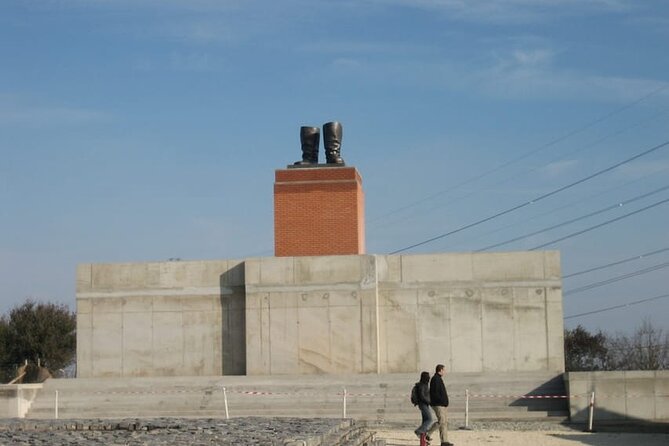
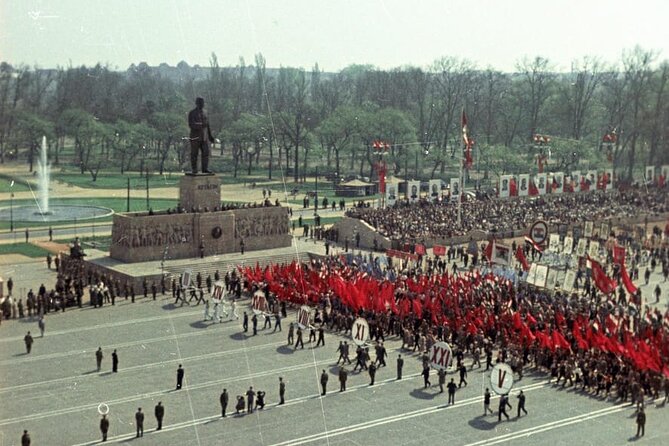
One of the most memorable sights is Stalin’s Boots. The enormous statue of the Soviet leader once towered above a grandstand in Budapest, where official ceremonies and political gatherings took place.
During the 1956 uprising, the crowd pulled down the statue. Only the boots remained. In the park, those boots have become a simple but powerful symbol of a population’s desire for freedom.
The story helps you understand why the park is more than a sculpture garden. The monuments represent state power, but the missing statue represents resistance. The contrast is sharp: a leader who was meant to appear permanent was reduced to a pair of empty boots.
In front of the former Stalin Grandstand, you can imagine the scene of the uprising and the public rejection of the dictator’s image. You are not asked to admire the monument. You are asked to understand what it meant, how people reacted to it, and why its destruction carried such force.
This is one of the moments when a guide adds real value. Without context, you might see a curious pair of boots and move on. With an explanation, the same object becomes a symbol of political change.
More things to do in Budapest:
- Budapest: City Highlights Cruise with Welcome Drink
★ 4.6 · 35,610 reviews - Budapest: Unlimited Prosecco, Beer and Aperol Spritz Cruise
★ 4.8 · 25,310 reviews - Budapest: Széchenyi Spa Day Ticket with Optional Upgrades
★ 4.3 · 23,911 reviews - Budapest: Nighttime or Daytime Sightseeing Cruise
★ 4.2 · 21,062 reviews
Secret police, fear, and everyday control
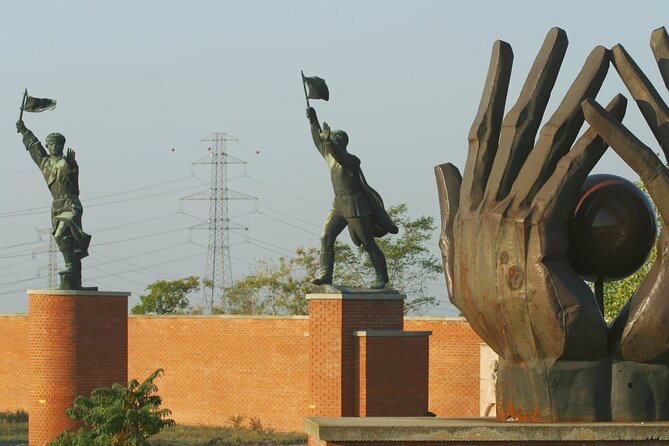
The tour also covers how the secret police recruited new members under Soviet rule and how ordinary people could be intimidated. This part moves the visit away from statues and toward daily life.
Propaganda was only one part of communist control. Fear, surveillance, and pressure affected how people spoke, worked, and trusted one another. The guide explains how a person could be drawn into the secret-police system and how intimidation worked in ordinary settings.
Victor is especially well suited to this subject. He grew up in communist Hungary and speaks about the period as lived experience, not as a distant political chapter. His approach is strongly opposed to the dictatorship, but he treats it as history rather than as something to celebrate. That balance matters when you are trying to understand how the system lasted for about 40 years.
You will hear about horrible aspects of the period, but the purpose is not simply to shock you. The point is to show how authoritarian systems maintain power. Public monuments, official slogans, surveillance, and fear worked together.
This section may be more serious than the photo opportunities suggest. If you want only a quick stop for unusual pictures, the tour may feel too detailed. If you want to understand how a dictatorship shaped ordinary life, the discussion is one of the strongest reasons to go with a guide.
Taking photos beside failed political symbols
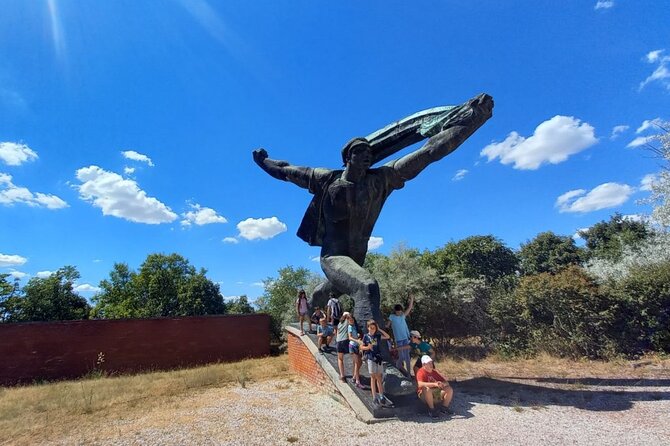
Memento Park allows photography, including pictures beside the giant monuments. That creates an unusual experience. You can place yourself next to figures that once filled Budapest’s public spaces and were intended to influence millions of people.
The photo opportunities are not just comic relief. They show how much the political meaning of an object can change. A statue built to inspire obedience can later become an object of study, curiosity, or even humor.
I like this freedom because it keeps the visit from feeling stiff. You can listen to the political explanation, then step back and appreciate the absurd scale of the works. The combination of serious context and visual oddity gives the park its character.
Still, be respectful. These monuments are connected to real suffering, fear, and political repression. The best photographs usually work when they show the scale and strangeness of the statues rather than treating the entire place as a joke.
Is $66.51 a fair price?
At $66.51 per person, this is not the cheapest way to spend a few hours in Budapest. The park itself is modest in size, and the guided portion lasts about 90 minutes. If you are comfortable arranging your own transport and reading about the site beforehand, you may decide the package costs more than you want to pay.
The value improves if you want convenience and interpretation. The price includes entry to Memento Park, an air-conditioned minivan, transport from central Budapest and back, a live English-speaking guide, and a bottle of water. The maximum group size of seven also keeps it closer to a private outing than a standard bus tour.
You are paying for access to a place outside the central sightseeing circuit. The minivan removes the need to work out the journey, and the guide gives meaning to objects that could otherwise seem random.
One especially useful benefit is the possibility of a convenient drop-off. Victor and the driver reportedly dropped one group at the Marriott in Budapest after the tour. Treat that as a possible courtesy rather than a guaranteed feature, since the stated end point is back at Batthyány tér.
For a history-focused visitor, the cost can be reasonable because the guide provides both transport and explanation. For someone who wants a quick look at statues, it may feel expensive.
Timing, weather, and comfort
The park is outdoors, so weather affects the experience. A cold or rainy day can make the 90-minute visit less pleasant, even though the minivan itself is comfortable.
The tour requires good weather. If conditions are poor, the operator may cancel and offer another date or a full refund. If you are visiting Budapest during a changeable season, keep some flexibility in your schedule.
A cold November visit can still be worthwhile, but you will want a warm coat and shoes suited to walking around an outdoor site. The available details do not promise extensive shelter, so plan for the weather rather than relying on the vehicle for comfort.
The tour requires a minimum number of participants. If that number is not reached, you can be offered another date or experience, or receive a full refund. Most people can participate, and service animals are allowed.
The mobile ticket is useful for a short scheduled outing. You should still arrive at the stated meeting point, Batthyány tér, with enough time to find the minivan.
Who should book this Budapest outing?
I would recommend this tour most strongly to you if you enjoy political history, twentieth-century Europe, or places that show how governments use public space. It is also a good choice if you want to understand Hungary beyond its grand architecture and café culture.
The tour suits first-time visitors who do not want to spend a large part of the day working out transport to an outlying attraction. The small group and live guide are also helpful if you prefer to ask questions rather than read signs on your own.
Families with older children and teenagers may find the statues memorable, especially when paired with the story of Stalin’s Boots. The subject includes repression and secret-police activity, so parents should decide if that material fits their children.
You may want to skip it if your Budapest schedule is already packed with central sights, or if you are mainly looking for attractive architecture. Memento Park is not polished in the usual tourist sense. Its value comes from the political story, the strange monuments, and the chance to see how public art changed meaning after communism collapsed.
Should you book the Memento Park minivan tour?
Book it if you want the park explained properly and prefer not to arrange a 10-mile trip on your own. Victor’s personal connection to communist Hungary adds a human layer, while the small group makes it easier to follow the discussion and ask questions.
Think twice if $66.51 feels high for a 2-hour-45-minute outing or if you are satisfied with a short, self-guided look. The park is relatively small, but the guide turns that short visit into a lesson about propaganda, fear, resistance, and the collapse of communist power.
For history lovers, this is one of Budapest’s more unusual outings. I would choose it on a day with good weather, keep the schedule flexible, and treat the guide as the main reason to pay for the tour.
FAQ
Where does the tour begin?
The tour begins at Batthyány tér in Budapest, Hungary.
Where does the tour end?
The activity ends back at the Batthyány tér meeting point.
How long does the tour last?
The tour lasts approximately 2 hours and 45 minutes. About 1 hour and 30 minutes is spent at Memento Park.
Is admission to Memento Park included?
Yes. The entry fee to Memento Park is included in the tour price.
Is the tour conducted in English?
Yes. A live English-speaking guide accompanies the tour.
How many people can join the tour?
The tour has a maximum of seven participants.
Just added in Budapest
- Budapest: Private Walking Tour with a Local Guide★ 3.6 · 6 reviews
- Budapest: Danube River Views Bike Ride★ 4.8 · 23 reviews
- Budapest: City Bike Tour with Coffee Stop★ 5.0 · 37 reviews
- From Budapest: Guided Tour of Eger with Wine Tasting★ 4.5 · 6 reviews
- Walk to recent and aged spiritual sanctuaries near Budapest★ 5.0 · 5 reviews
- Walking consultancy with alternative psychologist and author★ 5.0 · 2 reviews
- Budapest: Guided Tour of the Parliament Building in Spanish★ 4.6 · 1,240 reviews
- Budapest: 3-Hour Trabant Sightseeing Tour★ 4.7 · 28 reviews
Communist History Tours, compared.
Communist History Tour with House of Terror Option
Read our review →3-Hour Walking Tour About Communism (Small Group)
Read our review →

Lives of Hungarians Under Communist and Capitalist system
Read our review →
Private Budapest Hammer & Sickle Communist Times Tour
Read our review →
Memento Park Visit with Private Trabant Transfer
Read our review →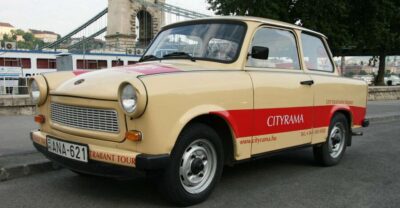
Browse the lists this tour appears in