
REVIEW · COMMUNIST HISTORY TOURS
Still Watching You! – Hungary’s Communist Story
History gets personal here. This three-hour Budapest walk turns Hungary’s Communist past into a story about war, borders, fear, resistance, and daily life, with stops at memorials, Parliament, Liberty Square, and the House of Terror. Instead of treating 1956 and the Soviet era as dates on a timeline, the tour connects them to places you can see around central Budapest.
I like the small maximum group of 15, which should make it easier to ask questions and follow the guide’s explanations. I also like the retro soda, snacks, maps, and local recommendations, small touches that give the walk a friendly, lived-in feel. The main drawback is the pace: with six main stops in about three hours, some places receive only a short explanation rather than a full visit.
Guide Emma receives especially warm praise for explaining Hungary’s history clearly, answering questions, and showing how wars and political decisions shaped the country’s present borders. That matters on a subject where a quick date or slogan can leave you more confused than informed.
In This Review
- Key points about Hungary’s Communist Story
- Why this Communist history tour is worth your time
- Meeting at the Opera House on Andrássy Avenue
- The Soviet Heroic Memorial and the first difficult question
- House of Terror at Andrássy út 60
- St. Stephen’s Basilica and older Hungary
- Liberty Square and Budapest’s disputed memories
- The Liberty Statue on Gellért Hill
- Parliament and the image of the nation
- The memorial to the 1956 Revolution
- A retro soda, snacks, and practical extras
- Is $87.27 a fair price?
- Who should book this walk?
- Should you book Still Watching You?
- FAQ
- How long does Still Watching You! Hungary’s Communist Story last?
- Where does the tour start?
- What places are included on the route?
- Is admission included at the major sights?
- What refreshments are included?
- How many people can join the tour?
- Can I cancel for a refund?
Key points about Hungary’s Communist Story
- A focused look at Hungary’s Red Past: The tour concentrates on the Communist period, the 1956 uprising, Soviet influence, and the memories attached to those years.
- Six central Budapest stops: You visit the Soviet Heroic Memorial, House of Terror, St. Stephen’s Basilica, Liberty Square, Parliament, and the 1956 Revolution memorial.
- Stories linked to real places: The route uses monuments, squares, and buildings to explain political change rather than relying only on textbook facts.
- Retro refreshments included: A Communist-themed bar stop includes a retro soda, with snacks also provided.
- A manageable group size: The tour accepts no more than 15 people, a useful limit for discussion and questions.
- A good orientation walk: Maps and further recommendations help you continue exploring Budapest after the tour ends.
Why this Communist history tour is worth your time
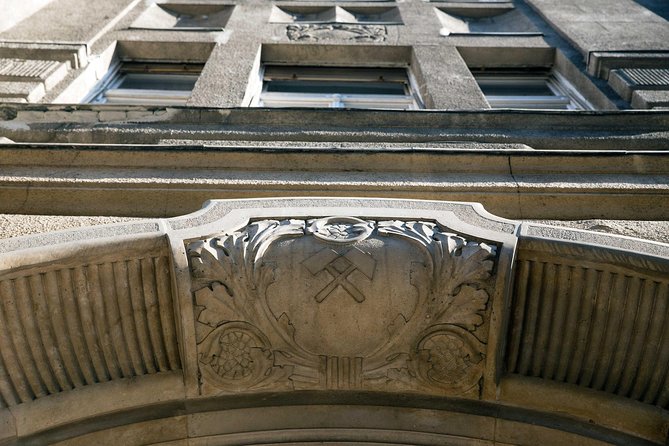
Budapest can look grand and imperial at first glance. You see the Opera House, St. Stephen’s Basilica, Parliament, and broad central squares. Yet much of the city’s modern story was shaped by occupation, dictatorship, revolution, and uneasy memory.
This walk helps you read those places differently. The Soviet presence was not just a chapter in a schoolbook. It affected Hungary’s government, borders, public monuments, private lives, and the way people remembered the Second World War and the 1956 uprising.
I like the tour’s choice to tell this story through vivid memories rather than a long lecture. That approach can make the subject easier to grasp, especially if you are new to Hungarian history. You are not simply shown a statue and given its construction date. You are encouraged to consider what the monument meant, who approved it, and how its meaning changed after the political system changed.
The route also reaches beyond Communism in a narrow sense. St. Stephen’s Basilica and Parliament help place the era within Hungary’s wider national story. That broader frame is useful because the Communist period did not replace every older symbol. It sat on top of centuries of monarchy, religion, nationalism, war, and political change.
More communist-era history tours:
- Budapest: Communist History Tour with House of Terror Option
★ 4.8 · 182 reviews - Communism in Hungary with a Historian
★ 5.0 · 70 reviews - Budapest: 3-Hour Walking Tour About Communism (Small Group)
★ 4.7 · 70 reviews
Meeting at the Opera House on Andrássy Avenue
The tour begins at the Hungarian State Opera House, at Andrássy út 22. This is a practical starting point in central Budapest and close to public transportation, so you should have no trouble reaching it with a little planning.
Starting here gives the guide a natural place to set the scene. Andrássy Avenue carries the polish of old Budapest, but the walk quickly turns toward the harder stories of the 20th century. That contrast is part of the appeal. You begin among elegant architecture and move into the political scars that are easier to miss if you only follow the city’s postcard highlights.
The activity lasts about three hours and returns to the same meeting point. Since several stops receive 10 to 20 minutes, expect a walking tour with frequent pauses, not a long indoor museum visit at every location.
You should have moderate physical fitness. The tour is near public transportation, but the supplied details do not specify the exact walking distance or the number of stairs. Comfortable shoes are a sensible choice, and you will want to keep your schedule flexible after the tour in case the route takes the full three hours.
The Soviet Heroic Memorial and the first difficult question
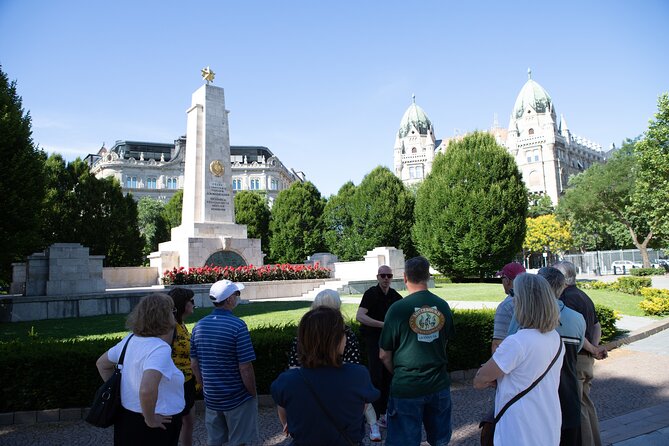
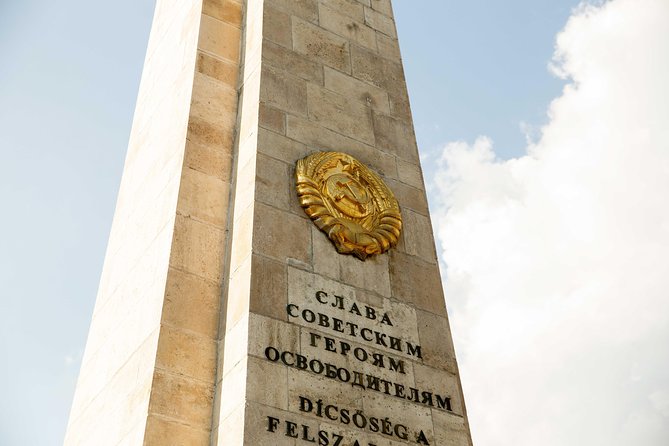
The first stop is the Soviet Heroic Memorial, a white obelisk set in a landscaped park. It commemorates Russian military personnel who served in the Second World War and is connected to the Soviet role in the liberation of Budapest from Nazi control.
The memorial opens a difficult question that runs through the entire walk: how can a country remember liberation when the power that brought liberation later imposed its own form of control?
That tension is important in Hungary. A monument can honor soldiers who died fighting Nazism while also reminding people of the Soviet political system that followed. The tour’s value here comes from the explanation around the monument, not from the obelisk alone.
The stop lasts about 10 minutes and has no admission charge. Do not expect a long visit. Instead, treat it as the first piece of a larger argument about memory, power, and public symbols.
House of Terror at Andrássy út 60
The House of Terror Museum is at Andrássy út 60, in a building associated with both Hungary’s fascist and Communist regimes. Its exhibits address people detained, interrogated, tortured, or killed there, and the museum serves as a memorial to the victims.
This is likely to be the most emotionally heavy stop. The building’s importance comes from what happened inside it, not simply from the displays. It represents the way one place can be used by different political regimes for similar forms of repression.
The tour allows about 15 minutes here. That is enough for an introduction, but not enough to see the museum properly if you want to study its exhibits. The experience details list admission as free at this stop, yet the tour’s included items specifically name snacks, a soda, maps, and recommendations rather than museum admission. I would confirm with Budapest Urban Walks before assuming a full museum visit is part of the walk.
That short timing is both a strength and a limitation. You get historical context without spending the whole afternoon indoors, but you may leave wanting more. If the House of Terror interests you, plan a separate visit and allow much more time than the tour stop provides.
More things to do in Budapest:
- Budapest: City Highlights Cruise with Welcome Drink
★ 4.6 · 35,610 reviews - Budapest: Unlimited Prosecco, Beer and Aperol Spritz Cruise
★ 4.8 · 25,310 reviews - Budapest: Széchenyi Spa Day Ticket with Optional Upgrades
★ 4.3 · 23,911 reviews - Budapest: Nighttime or Daytime Sightseeing Cruise
★ 4.2 · 21,062 reviews
St. Stephen’s Basilica and older Hungary
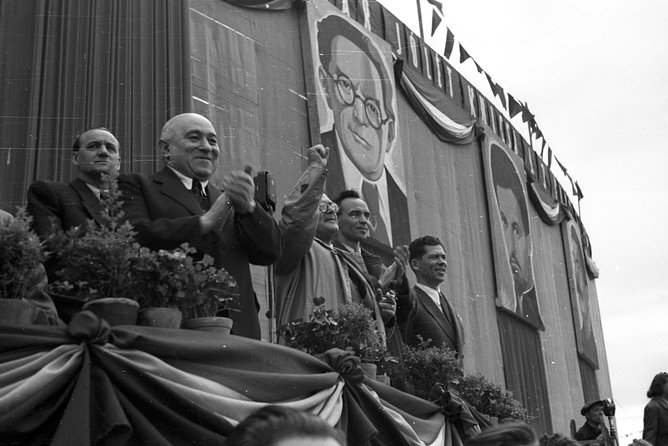
St. Stephen’s Basilica shifts the focus from Communist rule to Hungary’s long national and religious story. The Roman Catholic basilica is named for Stephen, Hungary’s first king, and its reliquary houses his right hand. Before 1920, it was the sixth-largest church building in Hungary.
Why include a basilica on a Communist history walk? Because political history makes more sense when you see what came before it. The church represents royal Hungary, Catholic tradition, and national identity. Those ideas did not vanish during the Communist years, even when the state promoted an officially atheist system.
The stop lasts about 15 minutes. Admission is not included, so you should not assume the group will enter as part of the tour. That makes this a brief orientation stop rather than a full basilica visit. You can use the time to take in the exterior and understand why the building matters to Hungary’s identity.
I appreciate this pause in the route. A tour devoted only to Soviet symbols could make Hungarian history seem like a simple contest between two political systems. The basilica reminds you that the country’s story is older and more complicated.
Liberty Square and Budapest’s disputed memories
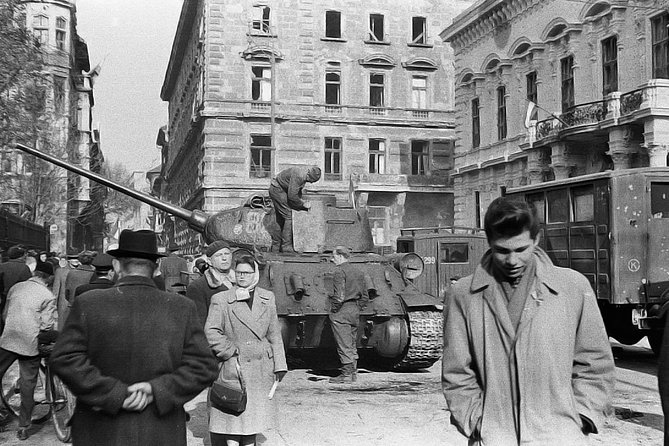
Szabadság tér, or Liberty Square, is one of the strongest stops on the route. It sits in Lipótváros and is surrounded by major political buildings, including the United States Embassy and the historicist headquarters of the Hungarian National Bank.
The square is known for two controversial memorials. One commemorates Hungarian Jewish victims of the Holocaust. The other honors Soviet soldiers who liberated Budapest from the Nazis in 1945.
This is exactly the kind of place where a guide adds real value. The monuments are not just objects to photograph. Their placement, wording, and political meaning matter. You are asked to think about who is honored, who is blamed, and how a government presents national suffering.
The stop lasts about 20 minutes, the longest listed pause on the route. That gives the guide more room to explain the competing memories attached to the square. It also gives you time to look around at the surrounding government buildings and understand how public memory sits beside present-day political power.
For me, Liberty Square may be the tour’s most useful stop for visitors who want to understand modern Budapest. It brings together the Holocaust, Soviet liberation, national memory, foreign diplomacy, and state authority in one compact urban space.
The Liberty Statue on Gellért Hill
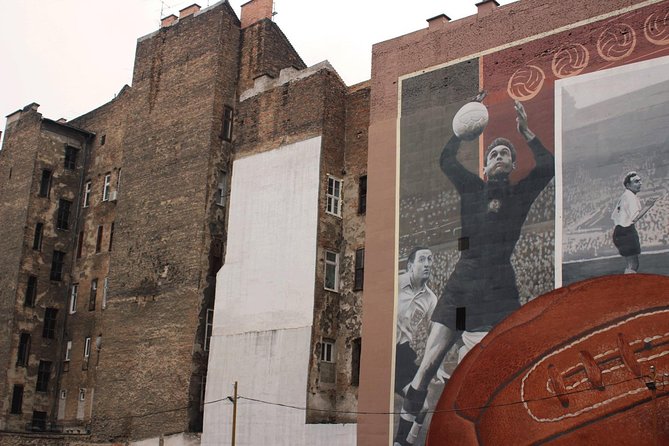
The route also includes the Liberty Statue, or Freedom Statue, on Gellért Hill. The monument commemorates those who sacrificed their lives for Hungary’s independence, freedom, and prosperity.
The information provided does not give a separate duration or admission detail for this stop. It is best to think of it as part of the tour’s wider discussion of freedom and political memory rather than as a guaranteed long visit.
The statue fits the theme well. Hungary’s Communist-era monuments did not all carry one fixed meaning forever. Public symbols can be renamed, reinterpreted, or viewed through a new political lens as the country changes. The Liberty Statue gives the guide another chance to explain that national monuments often outlive the governments that commissioned or controlled them.
Because the tour returns to the starting point and includes several central sights, ask the guide at the beginning how this stop fits into the walking route. The supplied details do not say if the statue is visited as a separate stop or discussed while the group is elsewhere.
Parliament and the image of the nation

The Hungarian Parliament Building is one of Budapest’s most famous landmarks and the seat of the National Assembly. Its Hungarian name, Országház, means House of the Country or House of the Nation.
The building offers a useful contrast with the smaller memorials and darker sites earlier in the walk. Parliament represents the state in its grandest form. It is also a reminder that governments change while the buildings of government remain.
The stop lasts about 15 minutes, and admission is not included. You should expect an exterior explanation rather than a full guided tour inside. If you want to visit the interior, arrange that separately and do not assume the three-hour walk covers it.
The Parliament stop is especially helpful if you are trying to connect Hungary’s Communist past with its political present. The guide can use the building to explain how power was organized, how national decisions shaped Hungary, and why the country’s current borders and political identity cannot be separated from the wars and regimes of the 20th century.
The memorial to the 1956 Revolution
The final listed stop is a memorial to the 1956 Hungarian Revolution and War of Independence. It honors the people who rose against the Communist regime.
For many visitors, 1956 is the central story of the tour. The uprising began as a challenge to Soviet-backed rule and became a national fight for independence. Its defeat left a lasting mark on Hungarian memory and helps explain the mixture of pride, grief, and political caution found in later decades.
The stop lasts about 15 minutes and is free to visit. The value lies in the guide’s explanation of what the memorial represents and how the uprising fits into the larger story of postwar Hungary.
Guide Emma has been praised for explaining how war decisions affected Hungary and helped shape the country’s size today. That is a useful detail to look for during this part of the walk. The revolution was not an isolated event. It belongs to a longer chain of military decisions, border changes, and outside influence.
A retro soda, snacks, and practical extras
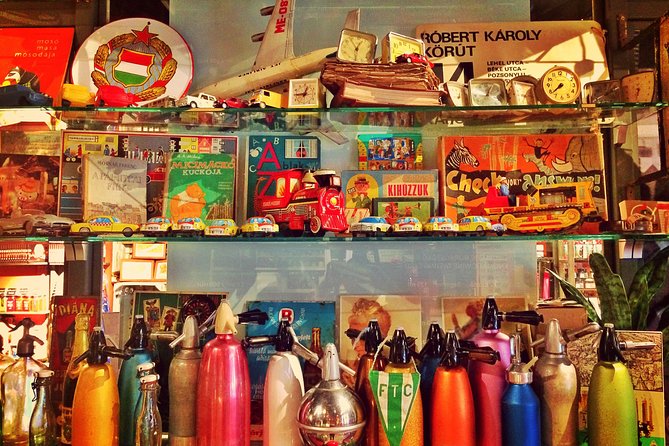
The tour includes a retro soda in a Communist-themed bar and snacks. Those items may sound small, but they fit the theme better than a generic café break. Food and drink can help make an era feel closer, especially when the tour is built around personal memories and everyday life rather than political leaders alone.
The soda is not a substitute for lunch. Food and drinks are not included unless specifically stated, and the included details name the retro soda and snacks rather than a full meal. Plan accordingly if you are taking the tour around midday.
You also receive maps and further recommendations. I value this because the route can act as a first look at a subject you may want to pursue later. The maps should help you understand where the sites fit within central Budapest, while the recommendations can guide the rest of your stay.
Is $87.27 a fair price?
At $87.27 per person, this is not a cheap orientation walk. The price makes the most sense if you want a focused history lesson, a small group, and a guide who can connect monuments to Hungary’s political story.
You are paying for about three hours of guided interpretation, not for a string of major admission tickets. St. Stephen’s Basilica and Parliament do not include admission, and the House of Terror stop is brief. If you want to spend hours inside museums and buildings, you will need separate tickets and extra time.
The value improves if you are curious about the Communist period but do not know where to begin. The route gives you a framework, and the included soda, snacks, maps, and recommendations add a personal touch. A maximum of 15 people also gives the tour a more usable scale than a large coach group.
I would compare the cost with your interests. History-focused visitors who want explanations and questions answered may find it worthwhile. If you mainly want interior access to Budapest’s major sights, the price is harder to justify because those admissions are not included.
Who should book this walk?
I would recommend it to you if you want to understand how Hungary moved through fascism, Soviet influence, Communism, and the 1956 uprising. It should suit adults, older children with an interest in history, and anyone who prefers a guide’s story to reading several museum panels alone.
The experience also fits a first visit to Budapest because it links several important central sights. You get a useful sense of how memorials, churches, government buildings, and public squares sit together.
It may not suit you if you want a relaxed sightseeing stroll with little discussion of suffering and political repression. The House of Terror and the 1956 memorial deal with painful subjects. The short stop times may also frustrate you if you like to examine every display or enter every building.
Children must be accompanied by an adult. Service animals are allowed, and the route is near public transportation. The group can include up to 15 people, and a moderate level of physical fitness is recommended.
Should you book Still Watching You?
Book this tour if you want Budapest’s Communist past explained through real places and clear storytelling. The strongest reason to choose it is the guide’s role, especially if Emma leads your walk. Her ability to answer questions and connect wars, decisions, and Hungary’s changing borders adds value that a map alone cannot provide.
Skip it if your main goal is interior access to Parliament, St. Stephen’s Basilica, or the House of Terror. In that case, use the route as an introduction and arrange separate visits.
For history-minded visitors, the price is reasonable when you treat the experience as a guided lesson in modern Hungary, not as a collection of admission tickets. Free cancellation is available if you cancel at least 24 hours before the start time, which gives you some flexibility while planning your Budapest days.
FAQ
How long does Still Watching You! Hungary’s Communist Story last?
The tour lasts approximately three hours and ends back at the Hungarian State Opera House, where it begins.
Where does the tour start?
It starts at the Hungarian State Opera House, Magyar Állami Operaház, Andrássy út 22, 1061 Budapest, Hungary.
What places are included on the route?
The route includes the Soviet Heroic Memorial, House of Terror Museum, St. Stephen’s Basilica, Liberty Square, the Liberty Statue, the Hungarian Parliament Building, and a memorial to the 1956 Hungarian Revolution and War of Independence.
Is admission included at the major sights?
Admission is not included for St. Stephen’s Basilica and the Hungarian Parliament Building. The listed stop at the House of Terror lasts about 15 minutes, and you should confirm with the provider what access is included before booking.
What refreshments are included?
The tour includes a retro soda in a Communist-themed bar and snacks. Other food and drinks are not included unless specifically stated.
How many people can join the tour?
The activity has a maximum group size of 15 people.
Can I cancel for a refund?
Yes. You can cancel for a full refund if you do so at least 24 hours before the experience starts. Cancellations or changes made less than 24 hours before the start time are not accepted for a refund.
Just added in Budapest
- Budapest: Private Walking Tour with a Local Guide★ 3.6 · 6 reviews
- Budapest: Danube River Views Bike Ride★ 4.8 · 23 reviews
- Budapest: City Bike Tour with Coffee Stop★ 5.0 · 37 reviews
- From Budapest: Guided Tour of Eger with Wine Tasting★ 4.5 · 6 reviews
- Walk to recent and aged spiritual sanctuaries near Budapest★ 5.0 · 5 reviews
- Walking consultancy with alternative psychologist and author★ 5.0 · 2 reviews
- Budapest: Guided Tour of the Parliament Building in Spanish★ 4.6 · 1,240 reviews
- Budapest: Vacation Photographer to collect great memories★ 5.0 · 49 reviews
Communist History Tours, compared.
Communist History Tour with House of Terror Option
Read our review →3-Hour Walking Tour About Communism (Small Group)
Read our review →

Lives of Hungarians Under Communist and Capitalist system
Read our review →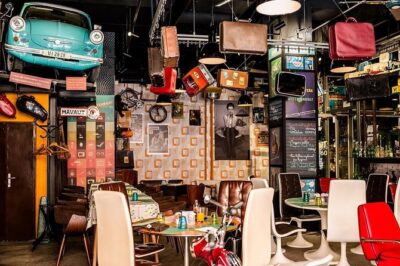
Private Budapest Hammer & Sickle Communist Times Tour
Read our review →
Memento Park Visit with Private Trabant Transfer
Read our review →
Browse the lists this tour appears in