
REVIEW · COMMUNIST HISTORY TOURS
Communism in Budapest: Private Tour with House of Terror Museum
Budapest’s past is written in its streets. This private walk links the 1956 revolution, Soviet-era life, Parliament, and the House of Terror Museum, giving you a clear way to understand Hungary’s difficult 20th century. I like the private format, which lets your guide adjust the pace and explain questions as they come up. I also like the unusual stops, especially the Columbo statue on Falk Miksa Street and Ronald Reagan in Liberty Square. The main drawback is the price: at $180 per person, this is costly for a three-hour walking tour, especially since the museum visit continues at your own leisure after the guide leaves.
The route moves through central Budapest rather than treating the city as a collection of isolated monuments. Guide Vera has earned special praise for her clear explanations, and one group spent more than three hours with her before continuing through the museum. Plan for steady walking, changing historical subjects, and a serious final stop rather than a light sightseeing outing.
In This Review
- Key points to know before booking
- Why this Budapest political walk is worth your time
- Starting at Bem József Memorial Square
- Falk Miksa Street and Budapest’s unexpected Columbo statue
- Liberty Square and the everyday side of Communist rule
- Kossuth Lajos Square and Parliament from the outside
- Entering the House of Terror Museum
- How the three-hour timing works
- The $180 price and the private-tour value
- Who should book this experience
- Should you book the Communism in Budapest tour?
- FAQ
- Where does the tour start?
- Where does the tour finish?
- How long does the experience last?
- Is the House of Terror Museum admission included?
- Is Parliament admission included?
- Is this a private tour?
- Does the tour include hotel pickup?
- Is transportation included between stops?
- What physical fitness level is recommended?
- Can I cancel for a full refund?
Key points to know before booking
- Begin at the 1956 revolution site: Bem József Memorial Square is where roughly 200,000 Hungarian students protested against Soviet rule.
- Look for Columbo on Falk Miksa Street: The scruffy fictional detective is an unexpected statue in a district better known for galleries, shops, and old city streets.
- See Parliament from Kossuth Lajos Square: The guide explains the political setting around Hungary’s most recognizable building.
- Connect fascism and Communism: The House of Terror Museum covers both regimes and memorializes people detained, tortured, and killed in the building.
- Keep the afternoon flexible: The tour lasts about three hours, but the House of Terror portion is completed at your own pace after receiving your entrance ticket.
- Expect a private experience: Only your group participates, and group discounts may help reduce the per-person cost.
Why this Budapest political walk is worth your time
I like tours that explain a city through ordinary streets, not just grand monuments. This one begins with a political event and then follows the subject through squares, statues, shops, and public buildings. You are not simply looking at Budapest. You are learning why certain places mattered during the rise and fall of Soviet influence.
The route covers the Nazi Occupation, fascist rule, Communism, the 1956 uprising, and the move toward democracy. That is a lot for three hours, so the guide’s role matters. A good guide can keep the story understandable instead of turning it into a long list of dates and political names.
The private setup is the tour’s strongest practical feature. You can ask about a family connection, a monument, or a confusing point in Hungary’s political story without worrying about holding up a large group. Your guide can also spend more time on the subjects that interest you and move faster through places that do not.
Still, this is not the cheapest way to see central Budapest. The $180 price is per person, and the experience does not include food, drinks, hotel pickup, or transportation. You are paying mainly for a private guide and the House of Terror admission. That can be good value for two or more people who want a focused lesson and personal attention, but it may feel expensive if you mainly want photos of Parliament.
More communist-era history tours:
- Budapest: Communist History Tour with House of Terror Option
★ 4.8 · 182 reviews - Communism in Hungary with a Historian
★ 5.0 · 70 reviews - Budapest: 3-Hour Walking Tour About Communism (Small Group)
★ 4.7 · 70 reviews
Starting at Bem József Memorial Square
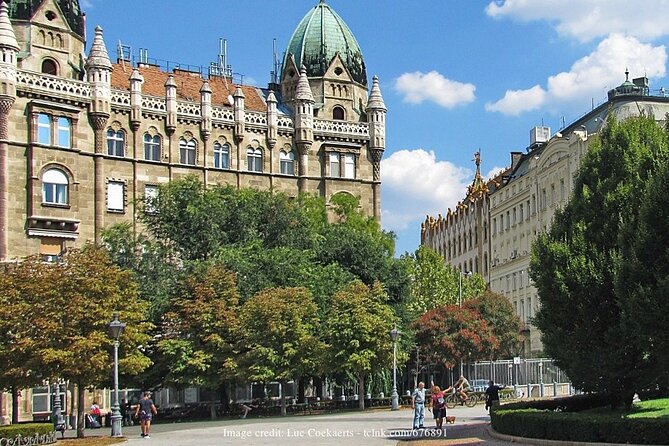
The tour opens at Bem József Memorial Square, on the Buda side of the city. This is an important starting point because the square became a major gathering place during the 1956 revolution, when about 200,000 Hungarian students protested Soviet rule.
You will have around 30 minutes here, with no separate admission charge. That gives your guide time to explain why the square mattered and how the protest movement grew. The setting helps you begin with a specific public space rather than a broad lecture about the entire country.
I would pay close attention here, even if the monument itself is not the reason you booked a walking tour. The value comes from the political setting and the guide’s explanation. This opening also prepares you for the rest of the route, where monuments and squares carry memories of changing governments.
The stop is short enough to keep the tour moving. If you prefer a slow look at every memorial, you may wish the group had more time. On the other hand, spending only half an hour here leaves room for the streets and museum ahead.
Falk Miksa Street and Budapest’s unexpected Columbo statue
From the memorial square, the walk continues through central Budapest. Falk Miksa Street adds a lighter, more curious note to a serious subject. Here you can see a statue of Columbo, the fictional LAPD detective known for his rumpled appearance and stubborn search for the truth.
It is an odd sight at first. Why place an American television detective in a Budapest street? The tour uses the statue as a memorable urban detail while you continue discussing the city’s political past. It breaks up the heavier material and gives you a photo stop that is easier to enjoy than another solemn memorial.
The itinerary also takes you past retro bars, butcher shops, monuments, squares, and other reminders of daily life under Communism. These details matter because political systems are not experienced only in government buildings. They shape shopping, entertainment, public behavior, and the look of a neighborhood.
You should not expect every location to be a formal attraction with an entrance hall. Much of the tour takes place outdoors, with the guide using the streets as a setting for conversation. That makes comfortable shoes and attention to the walking route more useful than dressing for a standard museum visit.
Liberty Square and the everyday side of Communist rule
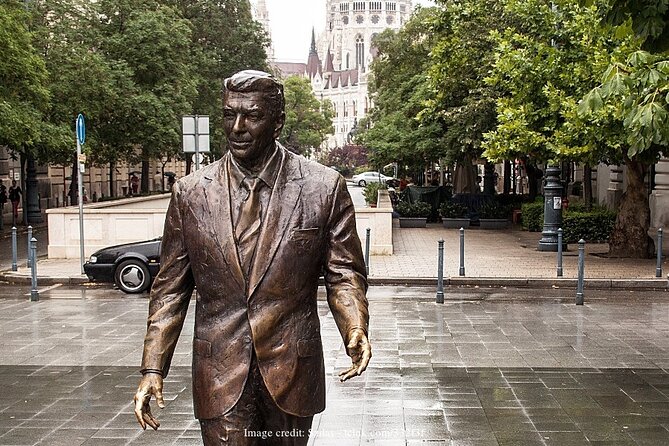
One of the central portions of the walk focuses on life under Communist rule. The guide points out monuments and public spaces that commemorate the past, including Ronald Reagan in Liberty Square.
This combination of old memorials and newer political symbols gives the walk a useful range. You are not looking at one fixed version of Hungarian memory. You are seeing how later generations have marked, explained, or reconsidered the country’s recent past.
The mention of retro bars and butcher shops may sound modest compared with Parliament, but those are the details I find useful. They help you think about what daily life looked like beyond official speeches and major uprisings. You might find this section especially helpful if you want to understand Communism as a lived system, not only as an international conflict.
Because this is a private tour, you can ask the guide to explain terms or events that are unfamiliar. Hungary’s 20th-century politics can become confusing quickly, with fascist rule, Nazi occupation, Soviet control, the 1956 revolution, and the eventual return to democracy all connected in a short span. Personal questions are one of the best reasons to choose this format.
More museums in Budapest:
- Budapest: Cat Museum Budapest Entry Ticket
★ 4.4 · 2,210 reviews - Budapest: Light Art Museum – Immersive New Media Experience
★ 3.9 · 1,269 reviews - Budapest: Budapest Retro Interactive Museum Ticket
★ 4.4 · 373 reviews - Star Wars story Museum Ticket Pass
★ 5.0 · 249 reviews
Kossuth Lajos Square and Parliament from the outside
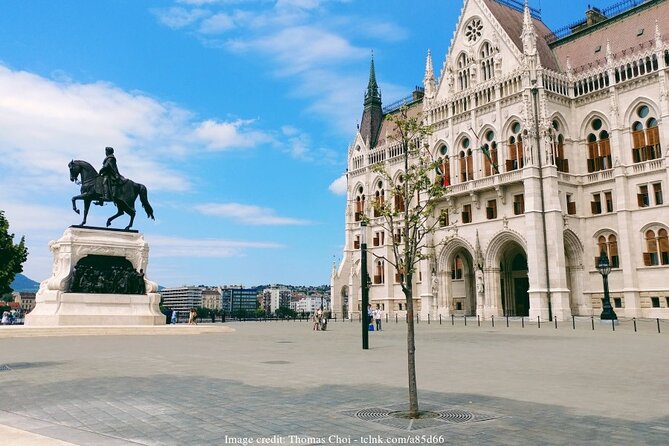
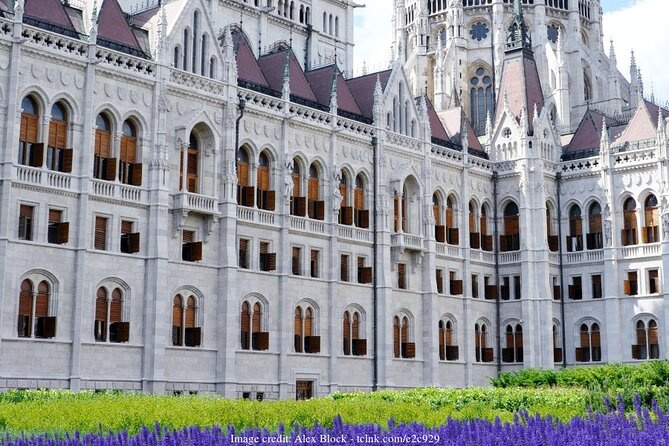
The route then reaches Kossuth Lajos Square, home to the enormous Neo-Gothic Parliament building. You will spend about 15 minutes outside the Hungarian Parliament Visitor Centre area, and the admission fee for the visitor centre is not included.
This is a short stop, but it gives the guide a strong setting for explaining Hungarian politics from earlier centuries through the 21st century. Parliament is not just a grand building for photos. It represents the national assembly and provides a natural point for discussing how political power changed over time.
Do not book this experience expecting an interior Parliament tour. The stated plan is an exterior visit, and the Parliament admission is not included. If you want to go inside, you will need to arrange that separately rather than assuming it forms part of this experience.
The brief timing also means you can take photographs without turning the stop into a long architectural visit. The building is one of Budapest’s essential sights, so combining it with political context is sensible. You get the view and the explanation, but you do not spend the entire morning on architecture when the main subject is modern Hungarian politics.
Entering the House of Terror Museum
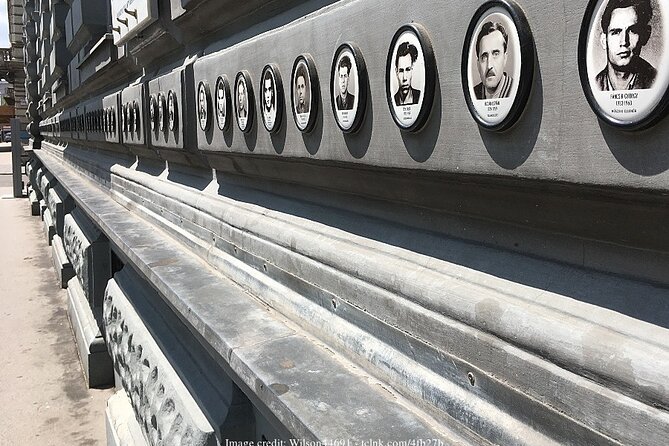
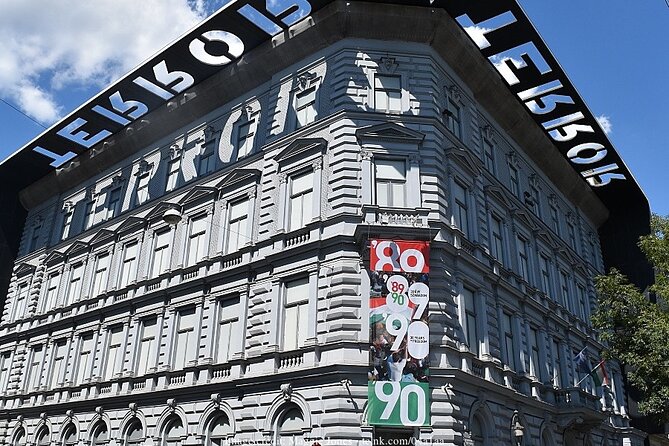
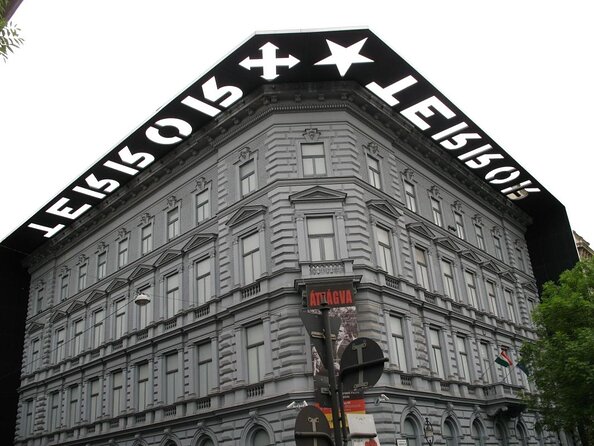
The final major stop is the House of Terror Museum at Andrássy út 60. Entrance is included, which is important because the museum is the most serious and emotionally demanding part of the experience.
The museum is a memorial to people detained, tortured, and killed inside the building. Its exhibits address the fascist and Communist regimes of 20th-century Hungary, linking two periods that should not be treated as identical but both brought fear and political violence.
Your guide provides the entrance tickets, and you then visit the museum at your own leisure. The planned museum portion is listed as about 30 minutes, but the experience can run longer. One group spent more than three hours on the wider tour and museum visit, so do not schedule a tight appointment immediately afterward.
There is a practical difference between a guided museum visit and a museum entry at the end of a tour. Your guide helps prepare you for the subject, but the museum portion is not described as a full guided tour through every exhibit. You may need to read, reflect, and move through the displays independently after receiving your ticket.
That arrangement suits people who like to set their own pace. You can take more time with sections that matter to you rather than staying with a group. It may disappoint you if you expect the guide to remain inside and explain each room.
The subject is also not suitable for everyone. The museum deals with detention, torture, death, and political oppression. I would choose a different Budapest outing if you are looking for a cheerful introduction to the city or if you do not want a museum focused on painful events.
How the three-hour timing works
The advertised duration is approximately three hours. The planned stops add up to roughly two hours and 15 minutes before allowing for movement between locations, discussion, questions, and the museum visit. In practice, the schedule can stretch, particularly if your guide gives detailed explanations or you spend longer inside the House of Terror.
That flexibility is helpful, but you should leave room in your day. The tour does not include transport between stops, so you walk the route with your private group. The experience starts at Bem József tér 2 and ends at the House of Terror Museum at Andrássy út 60.
There is no hotel pickup or drop-off. You are responsible for reaching the starting point and making your own arrangements after the museum. The meeting points are near public transportation, which makes the tour easier to fit into a Budapest day, but the provided information does not specify a particular transit line or transfer.
A moderate level of physical fitness is recommended. You will be walking through central streets and public squares for several hours, with outdoor stops along the way. Bring sensible shoes, and keep your hands free enough to pay attention while walking and taking photographs.
The $180 price and the private-tour value
At $180 per person, this is a premium experience. The price includes a professional guide for your own group, entrance to the House of Terror Museum, and time for photographs. It does not include meals, drinks, hotel transfers, transportation, or Parliament admission.
The value depends heavily on your group size and your interest in the subject. For a couple or family that wants a private conversation about Hungary’s political past, the price may be reasonable. You are not paying for a rushed audio guide or a large group where questions are difficult.
For a solo visitor, the cost is harder to justify unless this is a major priority. Budapest offers many lower-cost ways to see Parliament and central monuments. The private guide is what makes this tour different, so the price makes more sense when you will use that personal attention.
Group discounts may improve the deal for a larger private party. Check the final price for your exact group before booking, since the advertised figure is $180 per person.
The House of Terror ticket adds some value, but it is not the main reason to book. Choose this experience for the structure, explanation, and private pace. If you only want museum entry, purchasing a ticket separately may be the simpler option.
Who should book this experience
I would recommend this tour to you if you want more than Budapest’s famous views. It suits people interested in political change, memorials, modern European history, and the way public spaces carry difficult memories.
It is also a good choice if you prefer private tours. You can ask direct questions, take photographs without managing a large group, and spend extra time on subjects that catch your attention. Vera’s clear explanations are a particular reason to value the guide-led format.
Families with older children or teenagers may find the route useful if they are ready for serious museum material. The Columbo statue, shops, and public art provide lighter moments, but the House of Terror remains a difficult visit.
I would be more cautious about booking it if you have limited mobility, dislike walking, or want an easy sightseeing tour. The route does not include transport, and the subject is heavy. You should also skip it if your Budapest schedule is too tight to allow extra time at the museum.
Cancellation is flexible up to 24 hours before the start time, when you can receive a full refund. Changes or cancellations made less than 24 hours ahead are not accepted for a refund.
Should you book the Communism in Budapest tour?
Book it if you want Budapest explained through its political turning points rather than simply photographed. The route has a strong shape: the 1956 protest site, everyday Communist-era streets, Liberty Square, Parliament, and the House of Terror Museum.
The best reasons to choose it are the private guide, the unusual city details, and the included museum admission. The biggest concerns are the $180 per-person cost, the walking, and the serious subject matter.
If Vera is available, her reported ability to explain Budapest clearly makes her a strong choice. Leave your schedule open after the official three-hour estimate, wear comfortable shoes, and treat the House of Terror as a substantial museum visit rather than a quick final stop. For the right reader, this is a thoughtful and well-focused way to understand modern Budapest.
FAQ
Where does the tour start?
The tour starts at Bem József Memorial Square, Budapest, Bem József tér 2, 1027 Hungary.
Where does the tour finish?
The tour finishes at the House of Terror Museum at Andrássy út 60, 1062 Budapest.
How long does the experience last?
The tour lasts approximately three hours, though it may take longer if you spend additional time with the guide or inside the museum.
Is the House of Terror Museum admission included?
Yes. Entrance to the House of Terror Museum is included.
Is Parliament admission included?
No. The tour visits Parliament from the outside, and admission to the Hungarian Parliament Visitor Centre is not included.
Is this a private tour?
Yes. Only your own group participates in the activity.
Does the tour include hotel pickup?
No. Hotel pickup and drop-off are not included.
Is transportation included between stops?
No. Transportation throughout the tour is not included. The experience is a walking tour.
What physical fitness level is recommended?
A moderate physical fitness level is recommended because the experience involves walking between several central Budapest locations.
Can I cancel for a full refund?
Yes. You can cancel at least 24 hours before the local start time for a full refund. Cancellations made less than 24 hours before the start time are not refunded.
Just added in Budapest
- Budapest: Private Walking Tour with a Local Guide★ 3.6 · 6 reviews
- Budapest: Danube River Views Bike Ride★ 4.8 · 23 reviews
- Budapest: City Bike Tour with Coffee Stop★ 5.0 · 37 reviews
- From Budapest: Guided Tour of Eger with Wine Tasting★ 4.5 · 6 reviews
- Walk to recent and aged spiritual sanctuaries near Budapest★ 5.0 · 5 reviews
- Walking consultancy with alternative psychologist and author★ 5.0 · 2 reviews
- Budapest: Guided Tour of the Parliament Building in Spanish★ 4.6 · 1,240 reviews
- Budapest: Vacation Photographer to collect great memories★ 5.0 · 49 reviews
Communist History Tours, compared.
Communist History Tour with House of Terror Option
Read our review →3-Hour Walking Tour About Communism (Small Group)
Read our review →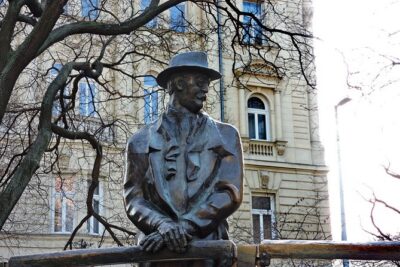

Lives of Hungarians Under Communist and Capitalist system
Read our review →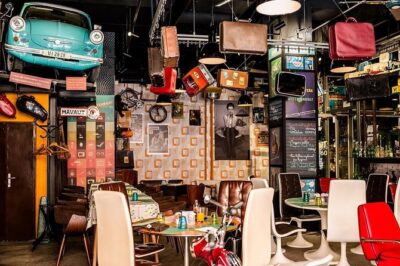
Private Budapest Hammer & Sickle Communist Times Tour
Read our review →
Memento Park Visit with Private Trabant Transfer
Read our review →
Browse the lists this tour appears in