
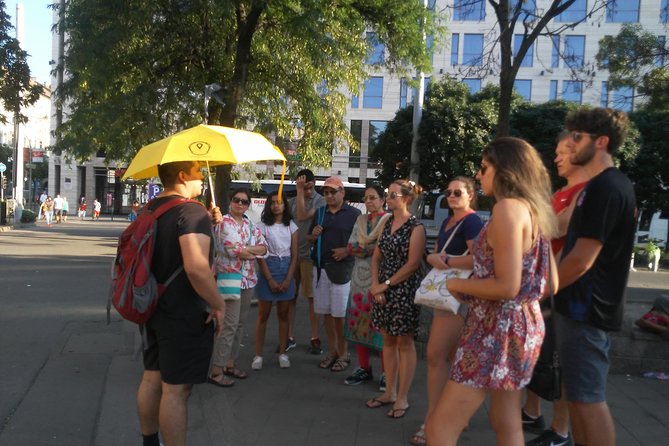
REVIEW · COMMUNIST HISTORY TOURS
Communist History Evening Walking Tour of Budapest
Budapest keeps its communist past in plain sight. I like this tour for its small-group format and its focus on real streets, squares, churches, and monuments rather than a museum room alone. I also like that the route links past events to present-day Hungary, though a three-kilometer walk and some noisy street stops may not suit everyone.
The tour begins at 6:00 pm near Blaha Lujza tér and finishes at Parliament Square. Guides such as Victoria have earned especially warm praise for clear English, humor, and university-level historical detail. At $36.01, you are paying for interpretation and context, not entrance tickets, so the value depends on how much you want to understand the city beneath its grand facades.
In This Review
- Key points to know before you book
- Why communist history gives Budapest a different face
- From Blaha Lujza tér along Andrassy Avenue
- St. Stephen’s Basilica and the church under communism
- Liberty Square and the memory of conflict
- Parliament Square and the 1956 uprising
- What the guide adds to the walk
- Is $36.01 a fair price?
- Who will enjoy this tour most?
- Practical details that affect your decision
- A useful companion to the House of Terror
- Should you book the Communist History Evening Walking Tour?
- FAQ
- Where does the tour start?
- Where does the tour finish?
- How long is the walking tour?
- How far do I need to walk?
- What language is the tour offered in?
- How many people can join the tour?
- Is bottled water included?
Key points to know before you book
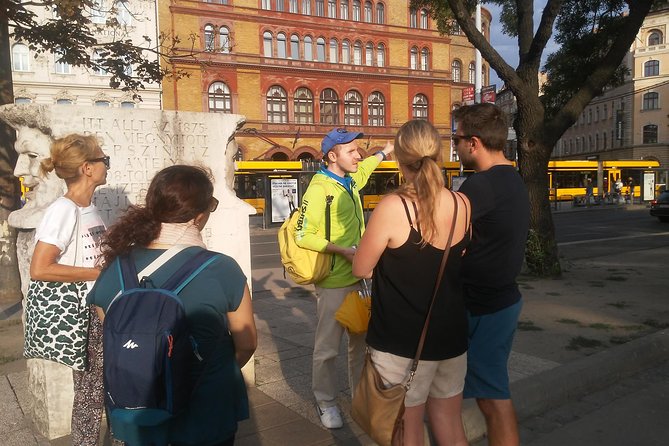
- The route covers about three kilometers: Wear comfortable shoes and expect a steady walking pace through central Budapest.
- You visit 22 locations and monuments: The route runs through districts VIII, VII, VI, and V, with several major stops along the way.
- The best-known stops are St. Stephen’s Basilica, Liberty Square, and Parliament: Each shows a different side of Communist-era Hungary.
- The tour begins at 6:00 pm: Evening light can make the walk pleasant, but bring an extra layer and check the weather.
- Small groups are capped at 15 people: That gives you a better chance to ask questions than on a large city tour.
- The guide is the main attraction: Victoria is praised for her English, humor, personal perspective, and detailed knowledge of Hungarian history.
Why communist history gives Budapest a different face
Budapest is easy to admire at street level. You see grand avenues, ornate buildings, the Danube, and Parliament’s famous riverside profile. Yet the city becomes far more meaningful when you understand what happened to its churches, businesses, monuments, and public spaces during the communist period.
This walk gives you that wider frame. It does not treat communism as a sealed-off chapter that ended neatly in 1989. Instead, the guide connects the political system to daily life and to the way Hungary still sees its past. That modern connection is one of the tour’s strongest features.
I would choose this walk early in a Budapest visit if recent European history interests you. The stories can change the way you look at familiar sights for the rest of your stay. You may pass the same buildings later, but you will know why a square mattered, why a monument disappeared, or why a public gathering became dangerous.
The tour is offered in English, and the guide quality matters a great deal here. Victoria receives repeated praise for her precise speech, humor, enthusiasm, and ability to answer questions. One especially useful point is that she teaches history at a university, which helps explain the detailed treatment of politics, society, and culture.
More communist-era history tours:
- Budapest: Communist History Tour with House of Terror Option
★ 4.8 · 182 reviews - Communism in Hungary with a Historian
★ 5.0 · 70 reviews - Budapest: 3-Hour Walking Tour About Communism (Small Group)
★ 4.7 · 70 reviews
From Blaha Lujza tér along Andrassy Avenue
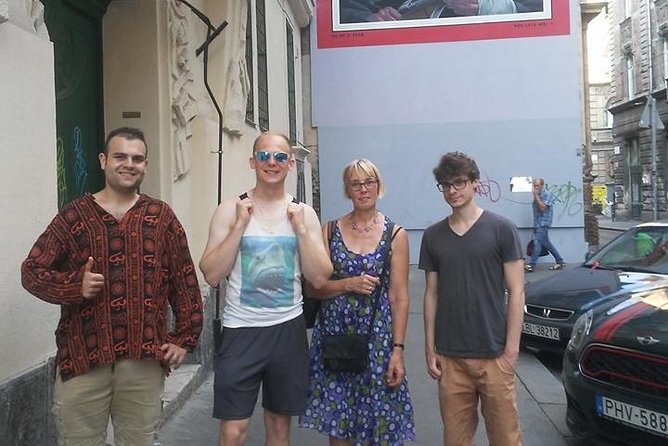
Meet at Budapest’s Blaha Lujza tér at 6:00 pm. The starting point is close to public transportation, which makes it practical if you are coming from another part of the city. From there, the route heads toward central Budapest and includes a walk down Andrassy Avenue.
Andrassy Avenue is not simply a grand boulevard for photographs. Along the walk, your guide explains how the area changed under different political systems and what happened to former monuments. This is where the tour’s method becomes clear: you are not just being shown attractive buildings, you are being asked to read the city as a record of political change.
The exact amount of time spent at each location can vary, since the guide may pause for questions. Still, the advertised route lasts about two hours, so you should expect a fairly active visit rather than long stops inside buildings.
The tour covers 22 locations and monuments across districts VIII, VII, VI, and V. Some places are beautiful and central. Others may look ordinary or even slightly worn. That is part of the point. A communist history walk cannot rely only on Budapest’s prettiest corners, since political memory often survives in less polished places.
St. Stephen’s Basilica and the church under communism
The first named stop is St. Stephen’s Basilica, where the group spends about ten minutes. The basilica is an impressive setting, but the focus here is not mainly architecture or religious art. The guide explains how communism affected the Hungarian church and religious life.
This stop also includes the story of a famous Hungarian football player who fled the communist system and was later buried at the basilica. That personal story gives the political subject a human scale. Instead of hearing only about state policy, you hear how the system could affect a well-known individual’s choices, identity, and relationship with Hungary.
I like this part of the route because it shows that communism was not only about statues, party offices, or protests. It also affected faith, public institutions, celebrities, and private decisions. The basilica makes a useful contrast with the political squares that come later.
Admission to the basilica stop is free as part of the walk. You should not expect a separate interior tour or a long visit inside the church, since the scheduled stop is brief. If you want a detailed look at the basilica’s interior, plan that at another time.
Liberty Square and the memory of conflict
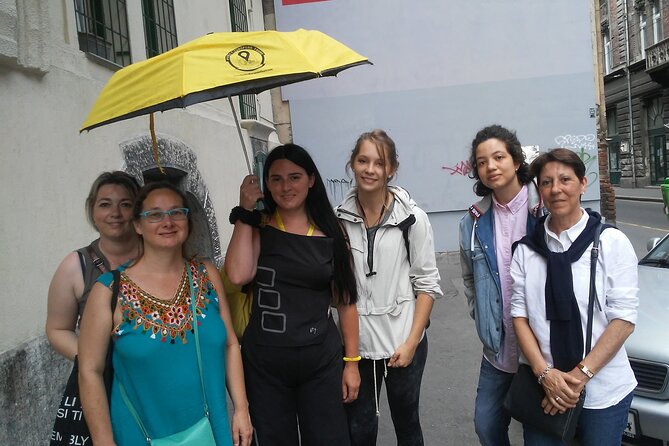
Liberty Square is one of the tour’s most important stops, with about 15 minutes set aside for explanation. The square has a complicated political past. It was once home to the stock exchange, which closed at the beginning of the communist period, and it later became the scene of bloody protests.
This is the kind of place where a guide adds real value. On your own, you may notice monuments and formal public buildings, but you may not know which events gave the square its emotional weight. The guide helps connect the physical setting to the political changes that reshaped Hungary.
The square also supports one of the tour’s main ideas: public space is never only decorative. A government can rename it, alter its monuments, control gatherings, or use it to display authority. At the same time, people can reclaim the same space through protest and resistance.
You may find this stop less comfortable than the basilica or Andrassy Avenue. It deals with violence, repression, and contested memory. That seriousness is useful, but it means the tour is not designed as a light evening stroll with a few amusing anecdotes.
One practical point comes from the way the tour is conducted. Street positioning can sometimes be awkward, especially near fountains, noisy areas, unpleasant-smelling corners, or busy walkways. You may need to move closer to hear, so stay near the guide and do not expect every explanation to happen in a quiet, ideal setting.
More history tours in Budapest:
- Budapest: Historic Cruise with Welcome Drink
★ 4.7 · 6,512 reviews - Budapest Historical Sightseeing – Free Walking Tour
★ 5.0 · 1,302 reviews - Buda Castle District Dark History, Legends and Vampire Night Tour
★ 4.5 · 1,240 reviews - BloodThirsty Hungary: Walking tour & Dark Historical Stories
★ 4.9 · 633 reviews
Parliament Square and the 1956 uprising
The walk finishes at the Hungarian Parliament Building, on Kossuth Lajos tér. This is a strong ending because Parliament is one of Budapest’s most recognizable sights, yet the square also carries the memory of the 1956 uprising against the ruling Communist Party.
The guide explains that considerable blood was shed here. The point is not simply to admire Parliament from the outside. You learn why this square became a site of resistance and sacrifice, and how the struggle against communist rule shaped the country’s path toward freedom.
I find this ending especially useful for visitors who have already photographed Parliament but know little about the events connected to it. The building’s beauty can make it easy to forget that the surrounding square has witnessed fear, protest, and political violence.
The tour ends at Parliament Square, close to Kossuth red-line metro station and tram 2. That makes it easy to continue your evening without retracing the route. You can head toward the Danube, return to your accommodation, or use public transportation to reach dinner.
What the guide adds to the walk
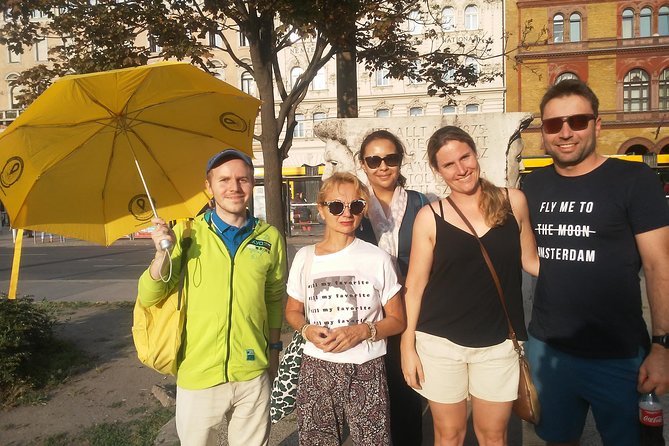
The subject is serious, but the best guide brings it to life without turning the walk into a lecture. Victoria is praised for her clear English, sense of humor, enthusiasm, and ability to explain both historical events and present-day life in Budapest.
That mix is important. A purely academic account might give you dates and political names but leave you unsure why they matter. A guide who only tells personal stories might be engaging but too light on facts. The strongest parts of this tour appear to combine both approaches.
You should feel free to ask questions. The small group has a maximum of 15 people, and that is a useful size for a subject that often needs clarification. With fewer people around you, it is easier to hear the guide and ask about subjects such as religion, resistance, emigration, sport, or the lasting effects of one-party rule.
The guide’s personal connection to Budapest also adds something a museum cannot easily provide. The tour includes perspective on what life in the city is like today and how the communist period still affects society. That does not mean every question will have a simple answer, but it gives you a better sense of continuity between past and present.
Is $36.01 a fair price?
At $36.01 per person, this is not the cheapest way to see central Budapest. You can walk past Parliament, Liberty Square, and St. Stephen’s Basilica without paying anything. The real question is what you would miss without someone explaining the events attached to those places.
The tour does not include major admission tickets because the main format is an outdoor walking route. Your fee pays for the guide, the preparation, the organization, and the chance to ask questions in a small group. For someone who already knows Hungarian history well, the price may feel less attractive. For a first-time visitor who wants context, it is easier to justify.
The value is strongest if you make use of the guide’s expertise. Listen closely, ask questions, and notice how the stories connect across the route. If you simply want a quick photo walk, you can spend less by exploring alone.
A bottle of water is provided, which is a small but welcome touch. There are no alcoholic drinks included, and parking fees are not covered. Since the route lasts two hours and covers roughly three kilometers, bring your own water as well if you tend to drink often, particularly in warm weather.
Who will enjoy this tour most?
I would recommend it most to adults, older teenagers, students, and anyone interested in twentieth-century European politics. It also suits you if you prefer learning through streets and public places instead of spending an entire afternoon in museums.
The tour can work well for families with older children, especially if they are interested in history. The stories of resistance, religion, sport, and freedom give the subject several entry points. Younger children who need frequent entertainment may find the political discussion demanding.
You should also consider your walking ability. You need to be able to walk or wheel yourself for about three kilometers. Most people can take part, and service animals are allowed, but the route is still an urban walk with street noise, changing surfaces, and standing during explanations.
The evening start is convenient for sightseeing. You can spend the afternoon at another attraction and then meet the group at Blaha Lujza tér. The timing also leaves you at Parliament Square around the beginning of the evening, though the exact finish can vary slightly with walking speed and questions.
Practical details that affect your decision
Confirmation is sent at booking, and the tour runs only with a minimum number of participants. If that minimum is not met, you are offered another date or experience, or a full refund.
Good weather is required. If poor weather causes cancellation, you can choose a different date or receive a full refund. You can cancel for a full refund up to 24 hours before the 6:00 pm start time, but cancellations or changes made later are not accepted.
The meeting point is Budapest, Blaha Lujza tér, 1085 Hungary. The finish is Kossuth Lajos tér 1-3, 1055 Hungary, beside Parliament. Check the route between your accommodation and the starting point before setting out, since arriving late could be difficult once the group has begun walking.
Keep your phone handy for the mobile ticket, wear shoes suitable for three kilometers, and stay near the guide at busy stops. Bottled water is supplied, but an extra layer is sensible for an evening walk.
A useful companion to the House of Terror
If this tour leaves you wanting more detail, the House of Terror Museum is a sensible addition. It is not part of the walking tour, but it offers a more concentrated look at the regimes that controlled Hungary and the suffering connected with them.
The walk and the museum serve different purposes. The walking tour shows you where political events unfolded and how the city’s public spaces changed. The House of Terror gives you a museum setting for exhibits and documentation. Combining both can give you a fuller understanding, but you may want a break between them because the subject matter is heavy.
I would not schedule every communist-history activity on the same day. Give yourself time to process what you hear, especially after the discussion of protests and bloodshed at Parliament and Liberty Square.
Should you book the Communist History Evening Walking Tour?
Book it if you want Budapest to make more sense than it does from sightseeing alone. The route brings together Andrassy Avenue, St. Stephen’s Basilica, Liberty Square, and Parliament, while the guide explains how communism affected religion, business, public protest, sport, and modern Hungarian society.
The strongest reason to choose it is the guide. Victoria’s clear English, humor, enthusiasm, and detailed teaching style have made a strong impression, and the small group gives you room to engage. The main cautions are the three-kilometer walk, occasional noisy street positions, weather dependence, and the fact that the tour is mostly about outdoor interpretation rather than paid interiors.
At $36.01, I see it as good value for a curious first-time visitor, a student of modern European history, or anyone who wants a thoughtful evening activity. If you only want Budapest’s grand architecture and easy photographs, choose another type of city tour. If you want to understand the difficult stories behind those sights, this is a worthwhile choice.
FAQ
Where does the tour start?
The tour starts at Blaha Lujza tér in Budapest, at 6:00 pm.
Where does the tour finish?
It finishes at Kossuth Lajos tér beside the Hungarian Parliament Building. The end point is close to Kossuth red-line metro station and tram 2.
How long is the walking tour?
The tour lasts approximately two hours.
How far do I need to walk?
You need to be able to walk or wheel yourself for about three kilometers.
What language is the tour offered in?
The tour is offered in English.
How many people can join the tour?
The maximum group size is 15 people.
Is bottled water included?
Yes. Bottled water is included, while alcoholic drinks and parking fees are not.
More Walking Tours in Budapest
- Budapest: Buda Castle Walk with Saint Stephen’s Hall
★ 4.5 · 3,012 reviews - Big Bus Budapest Hop-On Hop-Off Bus and Walking Tour
★ 3.5 · 2,206 reviews - Budapest: Buda Castle District Walking Tour
★ 4.6 · 2,108 reviews - Budapest City Landmarks Walking Tour in 2 Hours
★ 5.0 · 2,048 reviews
Just added in Budapest
- Budapest: Private Walking Tour with a Local Guide★ 3.6 · 6 reviews
- Budapest: Danube River Views Bike Ride★ 4.8 · 23 reviews
- Budapest: City Bike Tour with Coffee Stop★ 5.0 · 37 reviews
- From Budapest: Guided Tour of Eger with Wine Tasting★ 4.5 · 6 reviews
- Walk to recent and aged spiritual sanctuaries near Budapest★ 5.0 · 5 reviews
- Walking consultancy with alternative psychologist and author★ 5.0 · 2 reviews
- Budapest: Guided Tour of the Parliament Building in Spanish★ 4.6 · 1,240 reviews
- Budapest: 3-Hour Trabant Sightseeing Tour★ 4.7 · 28 reviews
Communist History Tours, compared.
Communist History Tour with House of Terror Option
Read our review →3-Hour Walking Tour About Communism (Small Group)
Read our review →

Lives of Hungarians Under Communist and Capitalist system
Read our review →
Private Budapest Hammer & Sickle Communist Times Tour
Read our review →
Memento Park Visit with Private Trabant Transfer
Read our review →
Browse the lists this tour appears in